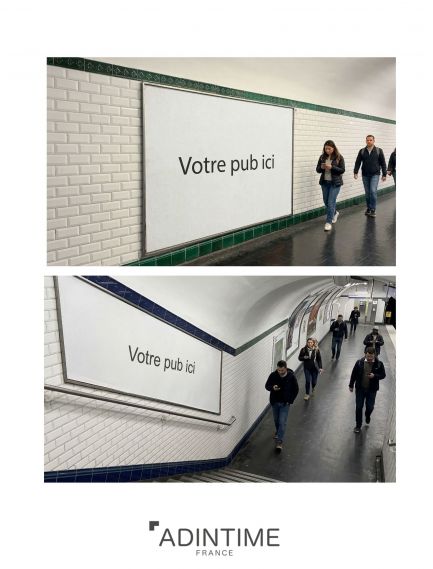
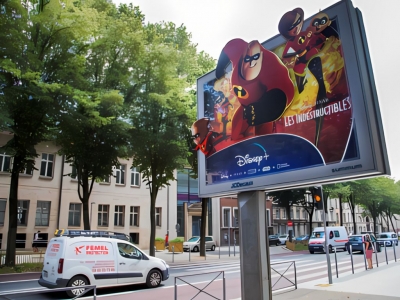
🟡 A for Attention
Everything starts by capturing attention. In an environment saturated with messages, this is the most difficult stage. If no one notices your advertisement, the rest does not exist.
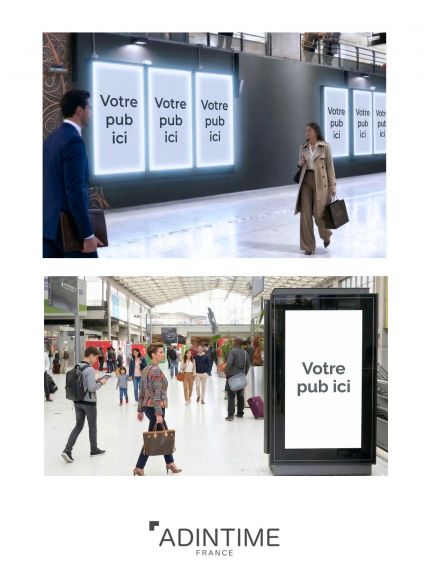
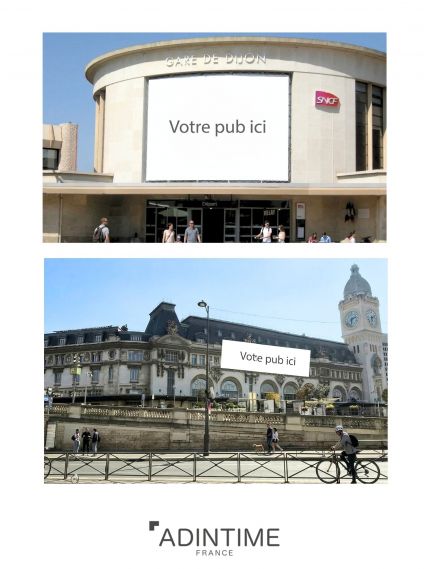
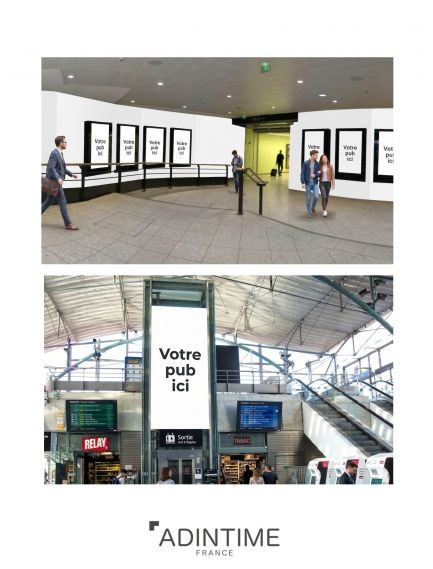
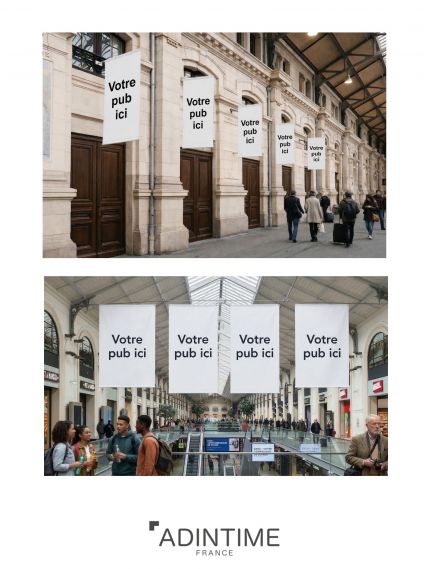
Attention is won through visuals, the hook, contrast, and the unexpected. A punchy headline, a strong image, a break with the setting. In billboard advertising, we know that a passerby gives an average of three to four seconds to a board: the first glance decides everything. Six words, a clear visual, a visible logo.
🔵 I for Interest
Once attention is captured, it must be transformed into interest. The prospect is looking at you; now, give them a reason to continue.
Interest is born from relevance. You address a need, a frustration, a curiosity. We move from "well, that's pretty" to "well, that concerns me." This is the time to talk about the problem you solve, not yet about yourself. A message centered on the benefit for the reader retains attention much better than a catalogue of features.
🟣 D for Desire
Interest is rational; desire is emotional. At this stage, you are no longer just seeking to interest, but to make them want it. The prospect must visualize themselves with your product and feel what they will gain from it.
Desire is worked on through proof and emotion: a concrete benefit, a before-and-after, a testimonial, a demonstration. This is where the recommendation of a peer or a customer review carries weight, because it makes the benefit credible. We don't want a product because it exists, but because we imagine what it changes for us.
🟢 A for Action
The final stage, the one that counts for revenue. The prospect wants it; now they must act, and quickly, before the urge fades away.
Action is triggered by a clear call and the removal of final hurdles. A visible button, unambiguous instructions, a time-limited offer, a reassuring guarantee. Too many advertisements fail here: they seduce but don't say what to do next. Desire without a path toward purchase is lost.
Here is the most useful use of AIDA for an advertiser: it is not just used to write a message, it helps build a media plan. Each stage calls for different levers.
| Stage | Objective | Adapted media |
|---|
| 🟡 Attention | Get noticed | Billboards, TV, display |
| 🔵 Interest | Give a reason to be interested | Social media, content, video |
| 🟣 Desire | Make them want it | Reviews, testimonials, demonstration |
| 🟢 Action | Trigger purchase | Search, retargeting, emailing |
A billboard campaign excels at capturing attention and establishing the brand, but one shouldn't ask it to trigger an immediate sale. Conversely, retargeting is tailored for action, not discovery. Allocating budgets according to AIDA avoids the classic error of expecting everything from a single channel. This is logic we find in a well-constructed cross-channel strategy.
>>> Capture attention with billboard advertising on Adintime
Variants of the model
AIDA has inspired several variations that refine the original model.
- AIDAS adds Satisfaction: the journey does not end at purchase; it includes the post-purchase experience that builds loyalty and transforms the customer into an ambassador.
- AIDCAS inserts Conviction between Desire and Action, emphasizing that a prospect often needs to be reassured before taking the leap, especially on a major purchase.
These variants do not replace AIDA; they extend it. The essence remains the same: you do not skip steps. Each phase prepares the next, and effective advertising knows which stage it is addressing.
Summary table
| Letter | Stage | What to do |
|---|
| A | Attention | Hook with a strong visual or headline |
| I | Interest | Show relevance for the reader |
| D | Desire | Make them want it through proof and emotion |
| A | Action | Call to action clearly |
Build campaigns that follow the journey
The AIDA model reminds us of a truth often forgotten: an effective campaign accompanies the prospect step by step, with the right message and the right medium at every moment.
>>> Build a media plan



 Top 30 best ad musics of all time (Updated 2026)
 The influence of advertising on purchasing behavior
 What is commercial advertising?
 Top 5 colors to use for creating your advertising posters | Adintime
 Facebook Ads Library: The ultimate guide to winning campaigns
 DISCOVER


 Movember : How brands can get involved without a misstep ?
 How to build an effective media strategy in 2026
 The AIDA model in advertising : Definition and examples
 First-party data : Definition and challenges in the cookieless era
 Customer Acquisition Cost (CAC) : Calculation and optimization