Greenwashing is a deceptive marketing practice used by some companies to make themselves appear greener than they really are. In this article, we look at five concrete examples of brands accused of greenwashing.
🌿 SUMMARY: ANTI-GREENWASHING STRATEGY
| Concept | Risk / Practice | Expert Tip |
|---|
| 🔍 Definition | Misleading or exaggerated environmental claims. | Avoid vague buzzwords. |
| ⚖️ Regulation | Strict frameworks (ARPP, EU Directives). | Use certified labels. |
| 📉 Impact | Loss of trust and potential legal sanctions. | Focus on transparency. |
| 🤝 Alignment | Full sync between CSR and Advertising. | Prove before you speak. |
| ⚠️ Trap | Claiming "100% neutral" without evidence. | Acknowledge limitations. |
Greenwashing: a risky marketing strategy
The ecological transition is transforming consumer expectations. To adapt, brands are multiplying their “responsible” campaigns.
But beware: in trying to appear greener than they are, some companies fall into the trap of greenwashing.
It's a risky strategy that can mislead consumers, expose the brand to criticism or sanctions, and do lasting damage to its image.
To avoid this, it's important to understand what is meant by “greenwashing”, and why it persists in advertising messages, despite the deontological rules in force.
What is greenwashing in advertising?
Greenwashing refers to communication that exaggerates or falsifies the ecological impact of a product or service. This can take the form of green visuals, vague words like “natural”, or unjustified claims of carbon neutrality.
In advertising, this is a way of riding the ecological wave without taking any in-depth action.
The result: sustainable development is promoted, but without any real effect on CO2 emissions or the use of fossil fuels.
This practice undermines trust and confuses consumers.
Why do some companies (still) engage in greenwashing?
Greenwashing often stems from the pressure to meet societal expectations. Brands want to show that they're doing something for the climate... even if their ecological transition is still limited.
Advertising campaigns move faster than internal transformation. Certain claims are also poorly mastered: there is talk of carbon-neutral service or “positive” impact without proof or a precise framework.
The result: discrepancies between rhetoric and reality which, if pointed out, can tarnish reputation and complicate future communication.
Examples of greenwashing
Green marketing has become a powerful lever for attracting attention. But in their efforts to appear committed, some brands end up producing misleading green advertising. Here are two recent cases showing how well-known companies have found themselves accused of greenwashing, sometimes in spite of themselves.
Why is Yves Rocher accused of greenwashing?
The Yves Rocher brand has long positioned itself as a “natural” beauty brand. It uses a strong plant-based universe, with plants featured prominently in its advertising messages and words like “botanical” or “naturally effective”.
However, several consumer associations, notably UFC Que Choisir, have questioned these claims, pointing out that some products still contain ingredients that are controversial for the environment or health.
This semantic vagueness can mislead consumers, especially when no specific environmental claim is backed up by a recognized label.
This raises the question: at what point does a “green” brand universe become greenwashing? Yves Rocher remains an emblematic case of the sometimes fine line between plant-based storytelling and greenwashing.
Is McDonald's greenwashing?
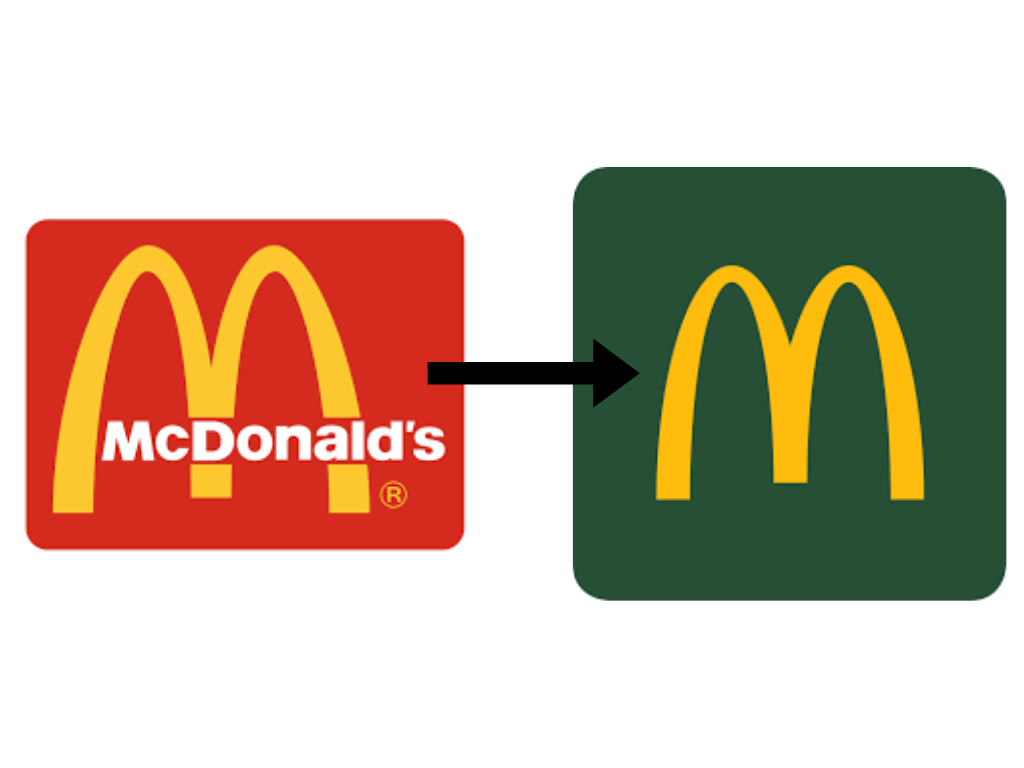
For several years now, McDonald's has been adapting its communications to appear “greener”. This includes kraft packaging, carbon-neutral slogans and the promise of more responsible products.
At the same time, the brand has repainted many of its restaurants green, abandoning its historic red. These gestures are part of a conscious strategy of ecological advertising.
But at heart, critics point to a major contradiction: greenhouse gas emissions linked to intensive farming, mass production and waste remain high.
Several NGOs, notably zerowastefrance.org, have denounced a lack of coherence between the business model and the messages conveyed.
This discrepancy feeds the idea of strategic greenwashing, where the green image masks a reality that is hardly compatible with the ecological transition.



 Top 30 best ad musics of all time (Updated 2026)
 The influence of advertising on purchasing behavior
 What is commercial advertising?
 Top 5 colors to use for creating your advertising posters | Adintime
 Facebook Ads Library: The ultimate guide to winning campaigns

 DISCOVER

 Movember : How brands can get involved without a misstep ?
 How to build an effective media strategy in 2026
 The AIDA model in advertising : Definition and examples
 First-party data : Definition and challenges in the cookieless era
 Customer Acquisition Cost (CAC) : Calculation and optimization