New ! Find your advertising panels at a glance  DISCOVER

2026 World Cup : How brands can turn it into an advertising opportunity?

Pôle Marketing

Want to save time ?

Get this article summarized in seconds with AI

Article summary: 2026 World Cup and advertising

💡 An unprecedented event for advertisers

  • 2 billion viewers expected worldwide, the largest sports audience in history
  • 16 global FIFA sponsorship slots sold out at 100%, a first (Adidas, Coca-Cola, Visa, Lay's, McDonald's…)
  • The 2026 World Cup takes place in the United States, Canada and Mexico from June 11 to July 19, 2026

📊 Official sponsors vs non-sponsors: two distinct strategies

  • Official sponsors: FIFA logo rights, stadium visibility, fan festivals, VIP hospitality, budgets of several tens of millions of euros
  • Non-sponsors: legal ambush marketing, DOOH around fan zones, creator content, licensed commercial viewing events
  • A well-executed ambush campaign can generate a higher ROI than some official campaigns (LEGO x Messi/Ronaldo/Mbappé, April 2026)

🎯 Practical options for French SMEs

  • Outdoor advertising and geotargeted DOOH around local fan zones: the most accessible lever
  • Social media campaigns built around football: no FIFA rights needed to benefit from the excitement
  • TV spots: broadcasters airing the matches in France sell advertising slots independently of FIFA rights

The 2026 World Cup kicks off today. In the United States, Canada and Mexico, 48 teams will compete until July 19 in front of two billion viewers. It is the most-watched sporting event in history.

For advertisers, the timing is unforgiving. Either you have a plan, or you watch the tournament as a spectator. But even if you did not prepare anything in advance, options still remain, and for some of them, the window of opportunity is still open.

This guide reviews the strategies available: those of official sponsors, those of creative non-sponsors, and those of SMEs with a realistic budget.

>>> Launch your campaign around the 2026 World Cup on Adintime

Table of contents

  1. The advertising market around the 2026 World Cup
  2. Official FIFA sponsors: who are they and what are they allowed to do?
  3. Non-sponsors: what you can (and cannot) do
  4. Ambush marketing: the challengers' playbook
  5. SMEs: capitalizing on the World Cup without a sponsor budget
  6. DOOH and outdoor advertising: the underestimated power of fan zones
  7. TV and digital: how to buy the right ad slots?
  8. Summary table of available options
  9. FAQ

The advertising market around the 2026 World Cup

The 2026 World Cup is the largest ever in terms of format: 48 teams instead of 32, 16 host cities spread across three countries, and 104 matches on the schedule. The global audience is expected to exceed two billion viewers throughout the tournament.

On the sponsorship side, FIFA's commercial program was fully sold out before kickoff, a first in the tournament's history. All 16 global sponsorship slots were sold, confirming the event's exceptional appeal to global brands.

What this means in practical terms for advertisers: the official spots in stadiums and fan festivals are already taken. But most of the event's advertising value does not come through FIFA rights. It comes through media, digital channels, outdoor advertising, and spaces that official sponsors cannot occupy on their own.

And in France, this opportunity remains widely available.

Official FIFA sponsors: Who are they and what are they allowed to do?

FIFA's 2026 commercial program is organized into three levels.

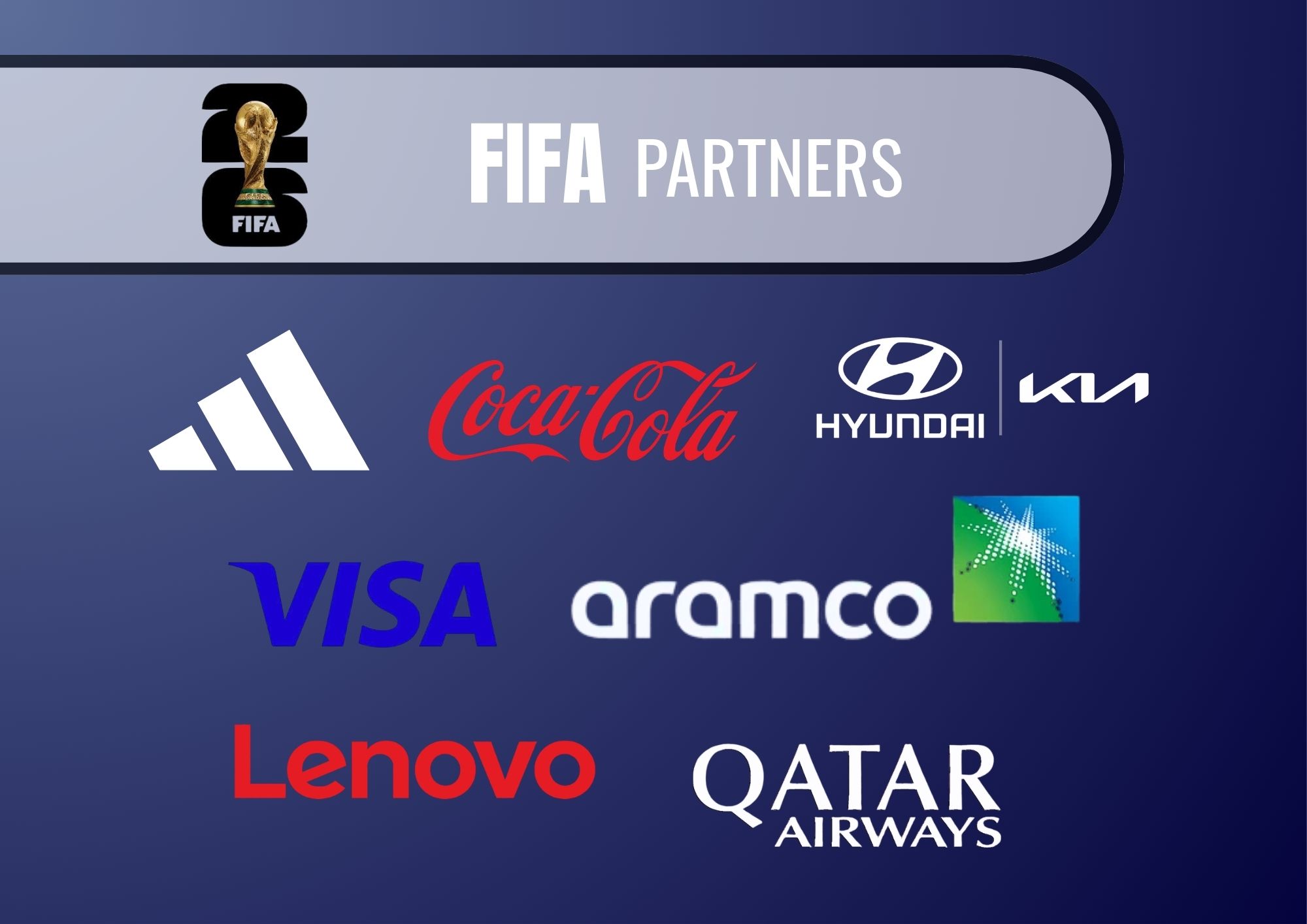
FIFA Partners (highest level): Adidas, Coca-Cola, Hyundai-Kia, Visa, Aramco, Lenovo, Qatar Airways. These brands benefit from an exclusive association with FIFA on a global scale, across all territories and competitions.

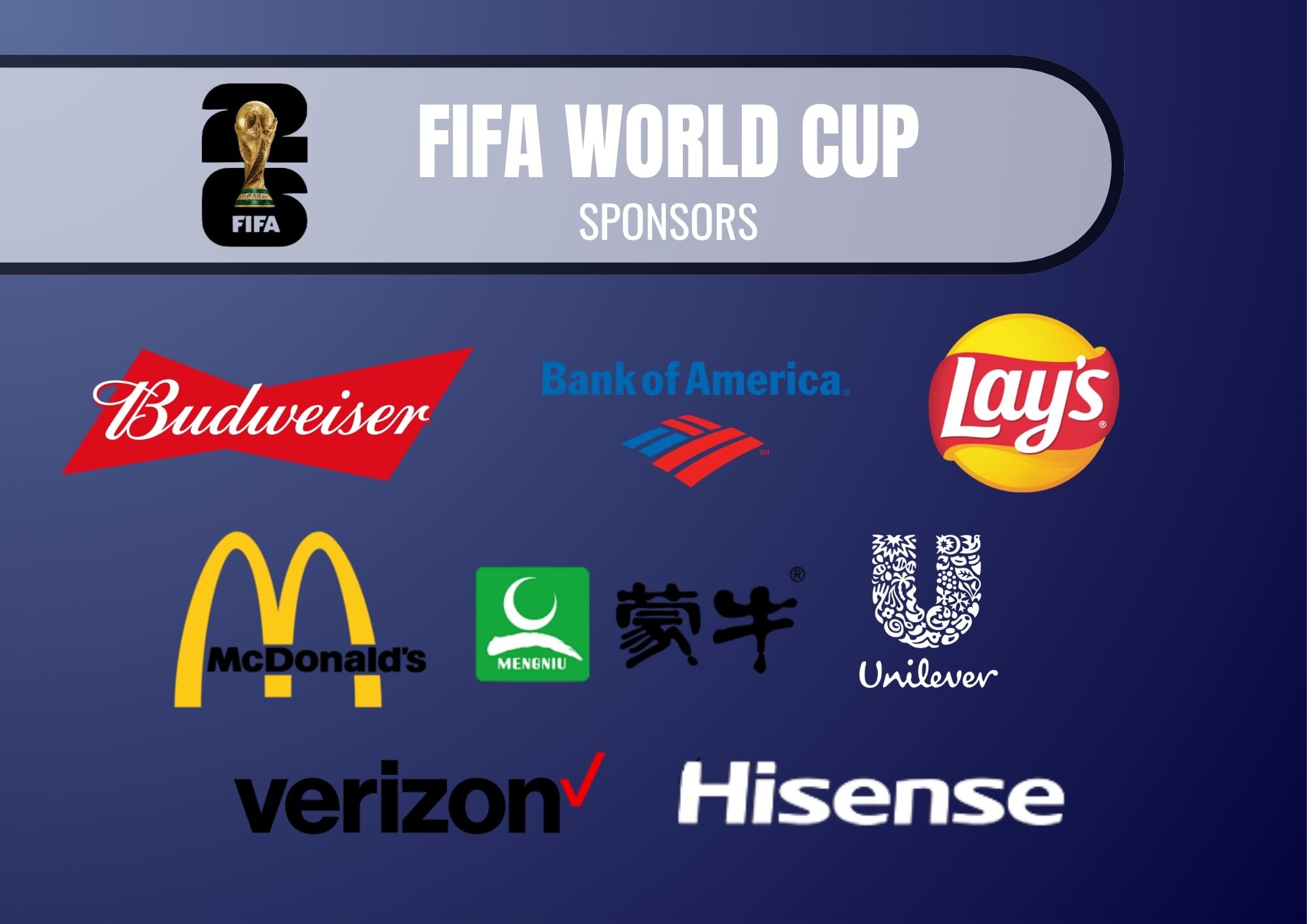
FIFA World Cup Sponsors (level 2): Budweiser, Bank of America, Frito-Lay (Lay's), McDonald's, Mengniu, Unilever, Verizon, Hisense. These brands have rights limited to the 2026 World Cup. According to estimates, packages at this level start at around $50 million.

Regional Supporters (level 3): rights limited to a specific geographic area. At this level, the investment remains in a more accessible range, several million euros, but still beyond the reach of the vast majority of French companies.

What these sponsors are allowed to do: use the official FIFA World Cup 2026™ logo, display their brand in stadiums and official fan festivals, activate VIP hospitality spaces, and run campaigns explicitly associating their name with the tournament.

What others cannot do: use the terms “FIFA World Cup 2026”, “World Cup 26” or “WC26” in their promotional communications. The official trophy, logo and mascots (Maple, Zayu, Clutch) are also protected. FIFA has deployed an artificial intelligence monitoring system combined with agreements with Instagram, TikTok and other platforms for automatic takedowns.

Non-sponsors: What you can legally do?

First of all, what is permitted is broader than most marketing teams imagine.

You can talk about football. You can refer to the tournament in generic terms, such as “the biggest football tournament of the summer” or “the 48 teams competing this summer.” What you cannot do is create an explicit commercial association with FIFA's protected trademarks.

Commercial viewing licenses are a practical and legal option. FIFA has established a “Public Viewing License” framework in three categories. To organize a viewing event with paid admission, food or beverage sales, and brand integration around the broadcasts, a commercial license is required, but it is accessible. Hundreds of venues (bars, restaurants, businesses) can benefit from it.

Activations in the “corridors” (public areas around stadiums and official fan zones, but outside protected perimeters) are permitted with the usual municipal permits, provided that protected trademarks are not used and no official association with FIFA is implied.

Creator content is entirely unrestricted as long as it focuses on football in general, shows supporters and moments of life around the matches, without using protected logos or terms.

Ambush marketing: The challengers' playbook

Ambush marketing is the strategy of associating a brand with the atmosphere of a major event without holding the official rights. Practiced for decades, it has given rise to some of the most memorable campaigns in advertising history.

The 2026 example already being cited as a benchmark: LEGO. The Danish brand is not an official sponsor of the 2026 World Cup. It holds a FIFA product license (its boxes carry the tournament logo), but it does not appear on any sponsor list. Yet in April 2026, it brought together Messi, Ronaldo, Mbappé and Vinicius Jr. in a campaign that “sent engagement through the roof,” according to Sports Marketing analysts. The ad does not mention FIFA and does not display the tournament logo. It talks about “football legends” and “passion.” The emotional power of the players does all the work.

Another classic example: Pepsi in 2006. While Coca-Cola was an official partner of the World Cup in Germany, Pepsi launched a campaign presenting itself as the “unofficial partner of football.” A deliberate cheeky move that became a case study in business schools.

Well-executed ambush marketing relies on three ingredients: creativity (finding the emotional association without the legal rights), timing (the window around a major event is short), and legal preparation (knowing exactly where the line is and staying within it).

It is not a risk-free strategy. FIFA actively monitors activities and can issue cease-and-desist letters. However, some brands have incorporated this into their communication plans: the cease-and-desist letter itself generates media coverage, provided the brand is prepared to respond publicly.

For the vast majority of French advertisers, however, sophisticated ambush marketing remains the domain of large brands with dedicated legal and creative teams. SMEs have other levers that are simpler and just as effective.

SMEs: Capitalizing on the World Cup without a sponsor budget

The real question for most French advertisers is: how can you benefit from the excitement without FIFA rights and without the budgets that come with them?

The good news is that the attention generated by the World Cup benefits the entire advertising ecosystem, not just official sponsors. People watch more television. They spend more time on social media. They go out more often to bars and restaurants. They wear football jerseys in the streets.

For an SME, this translates into very practical opportunities, without needing to use the FIFA logo.

Associate yourself with the atmosphere, not the event. A bakery can sell pastries in the colors of the French flag. A bar can host a match night featuring your brand. A sports brand can highlight its football products without mentioning the tournament.

Activate your existing customers. The World Cup is a natural opportunity to send communications, launch a promotional offer, and engage your audience on social media. No FIFA rights are required to talk about football and celebration.

Invest in DOOH and local outdoor advertising. Fan zones, whether official or organized by French municipalities, attract crowds. Visibility around these spaces—billboards, digital screens, banners—is accessible without special rights, provided local regulations are respected.

>>> Find advertising locations around French fan zones on Adintime

DOOH and outdoor advertising: the underestimated power of fan zones

DOOH (Digital Out Of Home) is particularly well suited to the World Cup environment. Digital screens can display messages in real time, react to tournament news, and change content after a match. They do not need FIFA rights to remain relevant.

In France, major cities organize their own fan zones, often in public spaces that are not officially affiliated with FIFA. These areas attract thousands of people per match. Nearby advertising spaces, 4x3 billboards, digital screens, street furniture, are available through traditional advertising markets.

For an SME, this is one of the most accessible and visible formats during the tournament. A well-positioned DOOH screen located 200 meters from a fan zone during a French national team quarter-final offers visibility that is difficult to achieve through other channels at the same cost.

The key is to book locations now. Demand surges during major competitions, and the best positions are secured quickly.

>>> Discover the five main reasons to use DOOH for your advertising campaign

Discover fan zones in Paris and nearby advertising billboards

Venue Address Type Dates Key Features Nearby Billboards
🏗️ Quai de la Photo
Coca-Cola Club
Port de la Gare
Paris 13
Official FIFA June 12 – July 19 800 capacity, 1,000 m² barge, terrace on the Seine View billboards →
🧱 Parc de la Villette
LEGO Fan Zone
Prairie Nord
Paris 19
Official FIFA June 13 – July 19 1,800 m², giant screen, LEGO activities, 5-a-side football View billboards →
🎪 Ground Control Paris 12 Event Venue June 11 – July 19 Giant screens, football pitch, DJ sets, gaming View billboards →
🏘️ La Communale Saint-Ouen
93
Public / Open June 11 – July 19 Giant screens, XXL foosball, food court, free entry View billboards →
🍕 La Felicità Paris 13 Food & lifestyle June 11 – July 19 5 giant screens, 5 food stalls, 2 bars View billboards →
🎬 Grand Rex Paris 2 Premium During the competition Giant cinema screen, 2,700 seats View billboards →
🌿 Cité Fertile Pantin
93
Outdoor From June 11 Giant screen, DJ sets, bars and catering View billboards →

This global event represents a major opportunity for brands. Discover how to advertise in the 2026 FIFA World Cup fan zones to capture the attention of millions of fans.

TV and digital: how to buy the right ad slots?

In France, the broadcasting rights for the 2026 World Cup are held by TF1 and beIN Sports. These broadcasters sell advertising inventory independently of FIFA rights. Buying a commercial on TF1 during a World Cup match is legal, accessible (depending on budget), and extremely powerful in terms of audience reach.

Matches involving the French national team, if any, will easily attract between 10 and 15 million viewers during prime time. It is one of the few opportunities each year for a brand to reach such a large audience with a single broadcast.

On digital platforms, the most effective strategy for non-sponsors is creator content. Football influencers, supporter accounts, and lifestyle creators discussing the event without using protected trademarks: this is where engaged audiences can be reached at budgets far lower than a TV commercial.

>>> Buy your TV spots around World Cup broadcasts on Adintime

>>> Launch social media campaigns around the tournament on Adintime

Summary table: 2026 World Cup advertising options

Option Indicative budget FIFA rights required Ideal profile
⚽ Official FIFA sponsor (tier 2) > $40M Yes Multinational corporations
📺 TV spot (TF1, beIN Sports) From €10,000 (excluding prime time) No Mid-sized companies, large SMEs
🏢 DOOH around fan zones From €500 / week No Local SMEs, retail chains
📱 Creator / influencer content €500 to €20,000 / campaign No All business sizes
🍻 Commercial viewing license A few hundred euros Required Bars, restaurants, public venues
📣 Social media campaigns From €300 No* All business sizes
*Without protected trademarks
🏃 Corridor activation (public area) Variable Municipal permit Experiential brands

The 2026 World Cup: an opportunity not to be missed, but one that must be carefully planned

The World Cup creates an exceptional advertising attention window. But like any major event, it also leads to higher costs and message saturation. The difference between a brand that benefits from the tournament and a brand that gets lost in the noise is often the precision of its targeting rather than the size of its investment.

For French SMEs, the advice is simple: choose one channel, focus your budget on it, and be present at the right moment, during French national team match nights. That is when audiences are at their highest and advertising recall is strongest.

>>> Do not hesitate to contact us to launch your campaign around the 2026 World Cup

>>> Here, you can discover our programmatic display offers

FAQ: 2026 World Cup and advertising

Can you use the term “2026 World Cup” in your advertising without being a FIFA sponsor?

No. The terms “FIFA World Cup 2026”, “World Cup 26” and “WC26” are registered trademarks protected by FIFA. Using them in promotional communications without official rights may expose advertisers to legal action. However, referring to “football”, “the summer of football” or “the global tournament” in generic terms is legally permitted.

What is ambush marketing, and is it legal?

Ambush marketing consists of associating a brand with the atmosphere of an event without holding the official rights. It is legal as long as no protected trademarks are used and no misleading official association is created. The line is thin and depends on the laws of each host country. In the United States, Canada and Mexico (the 2026 host countries), no specific ambush marketing legislation has been adopted, meaning FIFA must protect its trademarks under standard trademark law.

How can an SME benefit from the 2026 World Cup with a small budget?

The most accessible options are football-themed social media campaigns (without protected trademarks), DOOH advertising around local fan zones, radio or TV spots outside prime-time matches, and organizing commercial viewing events with a FIFA license. These opportunities start at a few hundred euros and do not require FIFA rights.

Who is broadcasting the 2026 World Cup matches in France?

The broadcasting rights in France are held by TF1 and beIN Sports. TF1 will air the most anticipated matches free-to-air, with audiences that may exceed 15 million viewers for French national team matches. These broadcasters sell advertising inventory independently of FIFA rights.

What is a FIFA commercial viewing license?

It is an authorization granted by FIFA that allows the organization of a public viewing event with paid admission, food and beverage sales, and brand integration around the broadcasts. Without this license, a bar or restaurant may still show the matches free of charge to its customers, but it cannot create a structured commercial event with ticketing or brand partnerships around the broadcast.

Do the TV rights of a broadcaster airing the World Cup include rights for advertisers?

No. Purchasing advertising space on TF1 during a World Cup match does not grant any FIFA rights to the advertiser. You are buying visibility to the broadcaster’s audience, not an association with the competition itself. Therefore, you cannot use FIFA terms or logos in your commercial, but you still benefit fully from the exceptional audience generated by the event.

Related products

Related posts