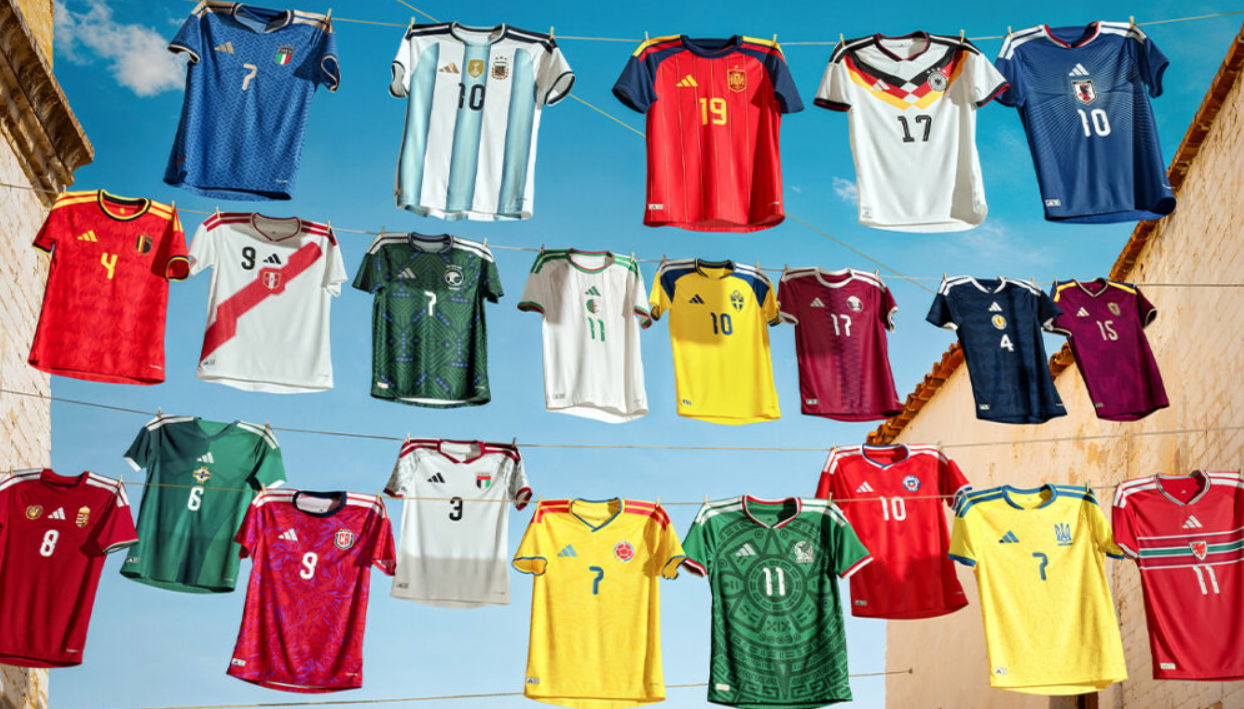
Photo credit: ADIDAS
Stadium naming rights consist of associating your company's name with that of the sports arena (Groupama Stadium in Lyon, Allianz Riviera in Nice). A format reserved for big brands, it offers permanent exposure across all the club's media and in the press. Budget: several million euros per year, on multi-year contracts.
The official partner or co-sponsor positions your brand as an "official partner" of the team or event. Less expensive than jersey sponsorship, this format gives access to rights to exploit the club's image, advertising space in the stadium, and VIP invitations for your clients.
Digital activation is the rising format. You directly sponsor the digital content of a club or an athlete: Instagram posts, YouTube videos, live stories during matches. The mechanics are similar to influencer marketing with creators. Budget: €500 to €5,000 per campaign, depending on the audience. This is the entry-level option of sports sponsorship, accessible to almost any company.
Why companies invest in sports?
The obvious answer is visibility. But that would reduce the subject to its most basic dimension.
Sports enjoy an extraordinary level of advertising acceptance. According to the Sponsorlink study published in December 2025, 62% of French people accept the presence of a brand on a sports jersey, a level much higher than that of classic digital formats, which are perceived as intrusive. In a context of advertising saturation, this is no small detail.
Sports sponsorship also provides an emotional proximity that is difficult to achieve through other levers. A fan who sees your logo on their club's jersey associates your brand with the values they project onto that team: team spirit, pushing one's limits, local roots. This association happens frictionlessly, without the cognitive effort required by traditional advertising.
For SMEs, the local roots argument is often decisive. Sponsoring the football or rugby club of one's town is a concrete way to exist in the local landscape, to strengthen presence among decision-makers, and to humanize communication, without going through costly national campaigns.
This is precisely what market data confirms: 59% of the total amount of French sports sponsorship comes from SMEs, on contracts mostly under €100,000 (Sporsora).
How to calculate the ROI of sports sponsorship?
This is the question that every marketing director asks, and which many clubs are unable to answer properly. Here is how to approach it seriously.
The ROI of a sponsorship is measured across three dimensions.
Media visibility is the easiest to quantify. How many times does your logo appear in the media (TV, press, digital)? Tools such as Nielsen Sports or Kantar make it possible to assign an equivalent value to this exposure, the Equivalent Media Value (EMV), by comparing it to what the same space would have cost in traditional advertising.
Awareness and brand image are measured through before/after studies. Have you improved in spontaneous or aided awareness within your catchment area? Simple surveys allow you to verify this, even on a modest budget.
Direct commercial benefits are the hardest to isolate, but not impossible to track. Client invitations, leads generated during stadium activations, promotional codes associated with the event: the more measurable activations you build around the partnership, the better you can evaluate its return.
Honestly, local clubs do not always have the tools to provide you with serious reporting. If you want to measure your return, it is up to you to structure it beforehand, in the contract.
>>> Click here to learn more about ROI
SMEs: is sports sponsorship really accessible?
Yes. And that is perhaps the most important thing to remember from this article.
The sports sponsorship market in France relies primarily on small contracts. Less than 1% of contracts exceed one million euros (Sporsora). 51% of the total market volume consists of contracts under €100,000.
Concretely, for €2,000 to €3,000 per season, you can get your logo on the jersey of a National or regional football club, a presence on the club's website and social media, and a few invitations per match. For a craftsman, an accounting firm, or a local SME, this is a perfectly reasonable communication budget given the visibility obtained.
A concrete example: a tennis club in the Paris suburbs negotiated a €6,000 per year agreement with a local car dealership. In exchange: logo on the outfits, organization of vehicle test drives during tournaments, invitations for the dealership's VIP clients. A simple, local partnership, and measurably profitable for both parties.
The point of vigilance for SMEs: check that the club is able to provide you with reporting (audience, press coverage, digital visibility). Without this, you are investing blindly.
>>> Complete your visibility setup with outdoor advertising around stadiums and fan zones on Adintime
How to find and negotiate your sports partnership?
The first rule: start with your immediate environment. Local clubs are often underfunded and very open to partnerships, even modest ones. A simple initial contact with the president or the communication manager of the club is often enough to start the conversation.
To find more structured opportunities, you can go through specialized agencies (Sportfive, Lagardère Sports, Havas Sports) or sponsorship/club matchmaking platforms. These intermediaries facilitate negotiation but charge a commission.



 Top 30 best ad musics of all time (Updated 2026)
 The influence of advertising on purchasing behavior
 What is commercial advertising?
 Top 5 colors to use for creating your advertising posters | Adintime
 Facebook Ads Library: The ultimate guide to winning campaigns
 DISCOVER
 Movember : How brands can get involved without a misstep ?
 How to build an effective media strategy in 2026
 The AIDA model in advertising : Definition and examples
 First-party data : Definition and challenges in the cookieless era
 Customer Acquisition Cost (CAC) : Calculation and optimization