New ! Find your advertising panels at a glance  DISCOVER

What is a media mix? A guide to allocating your advertising budget

Pôle Marketing

Want to save time ?

Get this article summarized in seconds with AI

Summary of the article : Media mix

💡 What the media mix is

  • The media mix is the combination of advertising channels chosen for a campaign, decided based on coverage, repetition, cost per contact, and complementarity between media
  • In France, advertising investments reached 35.7 billion euros in 2024, up 5 % compared to 2023 (Mediaposte / France Pub)
  • The share of digital in the French media mix rose from 20 % in 2019 to 29 % in 2024, without traditional media disappearing as a result

📊 Key criteria for choosing channels

  • Coverage: what share of the target audience does the channel reach? A mass medium like TV reaches wide but without fine targeting; digital channels allow for precise targeting but often a more limited coverage
  • Repetition: how many times must the target audience be exposed to generate memorization and conversion? Most studies place the efficiency threshold between 3 and 7 exposures depending on the channel
  • Cost per contact: the cost to reach a targeted person once, which varies considerably from one channel to another and remains the primary criterion for budget arbitration

🎯 Media mix and Media Mix Modeling

  • Media Mix Modeling (MMM) is a statistical method that measures the actual contribution of each channel to sales, by integrating seasonality and external factors
  • It allows simulating budget reallocation scenarios and comparing online and offline in a unified logic
  • For SMEs without access to these tools, a simplified approach in 4 steps is enough to build a coherent mix

The media mix is one of the most used terms in advertising briefs, and one of the least well-defined. We often hear "we are going to do a TV / digital mix" or "our mix this year is 70 % digital, 30 % traditional", without these formulations being based on a clear method.

Yet, building a rigorous media mix is one of the most structuring decisions of an advertising strategy. This is where budgets are arbitrated, channels are chosen, and synergies that will determine the overall effectiveness of the campaign are defined.

This guide gives a precise definition, explains the criteria for choosing channels, presents the basics of media mix modeling, and proposes an operational framework to build your mix, adapted to SMEs as well as major brands.

Article summary

  1. Definition of the media mix
  2. Media mix vs marketing mix
  3. Criteria for choosing channels
  4. Media mix modeling (MMM)
  5. Examples of mixes by advertiser profile
  6. Building your mix in 4 steps
  7. Trends 2024-2026 in France
  8. Table of channels by objective
  9. FAQ

Definition of the media mix

The media mix is the combination of advertising channels selected for a campaign or a given period, based on their respective characteristics (coverage, targeting, cost, format) and their ability to complement each other to achieve the set objectives.

Building a media mix means answering three questions:

01. The Audience Which channels should be used to reach the target audience ? 02. The Investment In what proportion should the budget be distributed among these channels ? 03. The Timing How should touchpoints be sequenced to maximize effective coverage and repetition ?

The definition seems simple, but it involves complex trade-offs. A channel with a low CPM can be expensive per effective contact if its audience does not match yours. A channel with a high retention rate might be unaffordable for a limited budget. A channel that performs well on its own can lose its effectiveness if it is not supported by a conversion channel further down the line.

Media mix vs marketing mix

The marketing mix is the overall strategic framework of the 4Ps: product (Product), price (Price), place (Place), and promotion (Promotion). The media mix only concerns the "Promotion" part: how and through which channels to communicate the product's value proposition.

In practice, the two influence each other. The price positioning of a product (luxury vs. entry-level) naturally guides channel choices: a luxury brand will not communicate through the same media as a phone operator. Place (presence in supermarkets vs. direct DTC vs. reseller network) also conditions the priority channels: there is no use generating digital leads if the product is not listed where customers go to buy.

Criteria for choosing channels

Five criteria guide the construction of a media mix:

Coverage What fraction of the target audience can the channel reach over a given period? Broadcast TV in prime time reaches millions of households in a single evening. A LinkedIn campaign targeted at CFOs of SMEs with over 50 employees reaches a few tens of thousands of profiles. Both have their uses, depending on the objective and the size of the target audience.
Repetition Advertising memorization is not achieved in a single exposure. Most media planning studies place the efficiency threshold between 3 and 7 contacts depending on the channel, the sector, and the complexity of the message. TV and radio, thanks to their high consistency, build repetition quickly. Digital channels allow controlling frequency capping (the number of exposures per individual), which traditional media do not allow.
Cost per contact It is not the gross cost of the channel that matters, but the cost to reach a person from the target audience once. A TV campaign at 50,000 euros can have a very low cost per contact if it reaches 3 million targeted people. A LinkedIn campaign at 5,000 euros can have a high cost per contact if the audience is very small. Analyzing the cost per thousand effective contacts (target CPM) is the primary filter for budget allocation.
Targetability Some channels allow for very precise targeting (by behavior, intent, demographics, geolocation); others broadcast widely without fine distinction. Digital excels at individual targeting. Addressable TV allows refining by geographic area or by household, but remains less granular than programmatic. Outdoor advertising targets by geolocation and type of traffic.
Complementarity Channels do not just add up: they interact. An awareness channel (TV, OOH) sets the stage for a conversion channel (search, retargeting). A video campaign that precedes a social ads campaign improves the engagement rates of the latter. Synergy between channels is often underestimated in channel-by-channel analyses.

>>> How to correctly identify your marketing target ?

Media mix modeling : Measuring the actual contribution of each channel

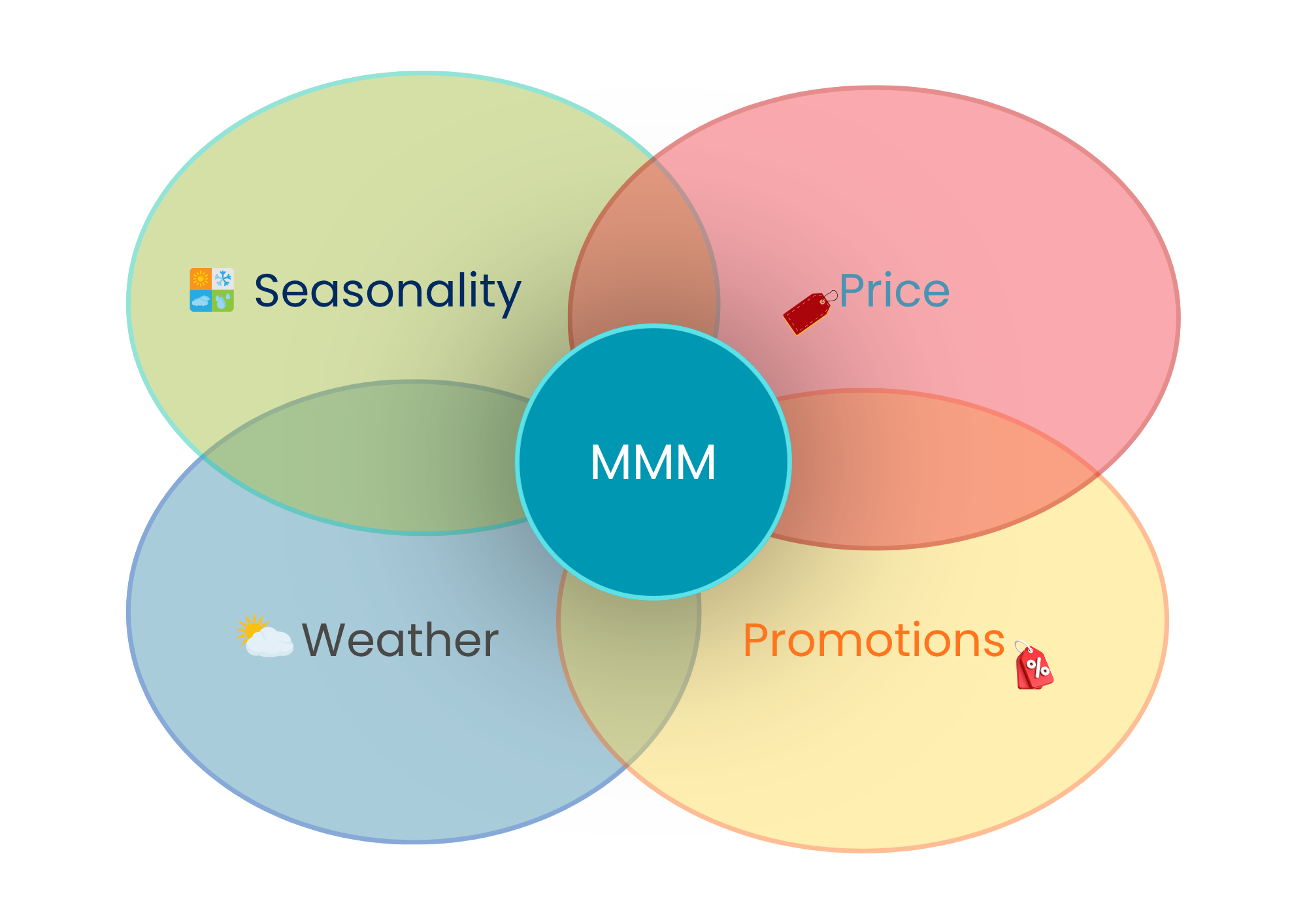
Media mix modeling (MMM) is a statistical method that quantifies the impact of each advertising channel on sales or another key KPI, taking external factors into account (seasonality, price, promotions, weather).

Its principle: using aggregated historical data (investments per channel, sales, contextual factors), the model estimates the marginal contribution of every euro invested in each channel. It then allows for scenario simulations: "If we shift 20 % of the TV budget to digital video, what happens to sales?"

The major advantage of MMM over traditional attribution approaches (last click, multi-touch): it integrates both online and offline channels into a unified logic, and measures medium-term effects (with TV building brand value that materializes as conversions weeks after).

Its main limitation: it requires sufficient historical data (at least 2 years of campaigns), statistical expertise, and a time investment. For major brands deploying significant budgets across multiple channels, it is an essential tool. For SMEs, simplified approaches (geographic tests, incremental attribution on a few channels) can provide useful results without full modeling.

Examples of mixes by advertiser profile

  1. Local B2C SME (budget 5,000 to 20,000 euros): The objective is quick profitability and conversion, not building national awareness. The typical mix: Google search to capture existing demand, social ads for geographically targeted prospecting, retargeting to re-engage website visitors. Local outdoor advertising can complement targeted areas if the average order value justifies it. For benchmarks on affordable budgets, our article on how to communicate with less than 2,000 euros provides useful foundations.
  2. National B2C major brand: The priority is coverage, repetition, and long-term brand building. The mix integrates TV or digital video for awareness, social media and display for consideration, search and retargeting for conversion. DOOH complements at the point of sale or in urban areas. The entire strategy is guided by an MMM to optimize trade-offs quarter by quarter.
  3. B2B SME: The target audience is narrow but high-value. The mix focuses on qualified lead generation: LinkedIn for precise professional targeting, search to capture purchase intent, content marketing to nurture prospects over time. The long sales cycle makes last-click measurement misleading: MMM or multi-touch attribution are necessary to evaluate the true contribution of upper-funnel channels.
  4. Large B2B company: Same logic, with an expanded scope: events and sponsoring for industry visibility, specialized press for authority, email automation for nurturing, social and display retargeting to maintain a presence with prospects during long cycles.

>>> To discover our outdoor, radio, and digital campaign solutions, click here!

>>> To integrate the power of mass video into your strategy, discover how to launch your TV media plan

Building your media mix in 4 steps

Step 1 : define the main objective Awareness, consideration, conversion, or loyalty? The answer guides everything else. An awareness mix maximizes coverage and raw repetition. A conversion mix maximizes qualified contacts at a lower cost. Most campaigns serve several objectives simultaneously, but a main one must be identified to guide trade-offs.
Step 2 : qualify the target audience Who are we trying to reach? Target size, demographics, media behaviors, consumption moments. A senior who watches linear TV and reads print press is not accessible through the same channels as a young urban professional consuming mostly on the move. The target audience defines the relevant channels. Our guide on which media to choose for your advertising explores this target/channel mapping in detail.
Step 3 : select channels according to criteria For each preselected channel, evaluate: coverage on the target audience, cost per contact, possible repetition, format adapted to the message. Keep the 2 to 4 channels that form the best compromise of coverage / cost / complementarity. A mix that is too scattered across 8 channels without sufficient budget for each is less effective than a mix concentrated on 3 well-funded channels. These trade-offs are at the heart of defining a structured media plan.
Step 4 : sequence and allocate the budget Not all channels are activated at the same time with the same intensity. An awareness channel (TV, OOH) can open the campaign to create a level of recognition, before activating conversion channels (search, retargeting). Budget allocation must reflect this sequencing: the channel setting the stage receives its budget upfront, the capturing channel receives its own when demand is highest.

Media mix trends in France 2024-2026

Advertising investments in France reached 35.7 billion euros in 2024, up 5 % compared to 2023 (France Pub / Mediaposte). The share of digital rose from 20 % in 2019 to 29 % in 2024, a steady growth reflecting the migration of audiences toward digital platforms.

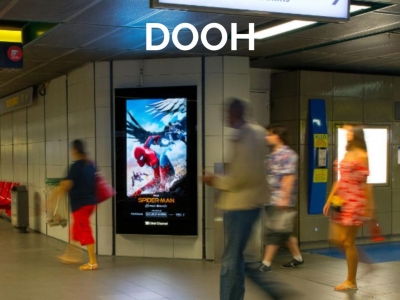
But this digital growth does not mean traditional media is obsolete. TV remains the unmatched mass coverage channel in France. Outdoor advertising (OOH and DOOH) is experiencing a renaissance driven by the digitization of inventories. Radio maintains a strong audience during daily commutes. The best-performing mixes are not those that maximized the digital share, but those that optimized the complementarity between online and offline channels.

The challenge for 2024-2026 is no longer about adding digital: it is about knowing how to measure the actual contribution of each channel. This is where media mix modeling and incremental attribution approaches become strategic tools, not just conference topics.

Another fundamental trend: omnicanality. 81 % of French advertisers report using social media in their mix, 76 % using display, and 74 % using video. The question is no longer "which channel to choose" but "how to orchestrate them so they reinforce each other."

>>> For a practical approach to cross-channel strategy, our detailed guide covers the synergy mechanisms between media

Summary table: Channels by marketing objective

🎯 Objective 🚀 Priority channels 📊 Key metrics
✨ Awareness TV, online video, OOH/DOOH, radio Coverage, GRP, retention rate
🤔 Consideration Social media, native advertising, display, content Engagement, time spent, click-through rate, site visits
💰 Conversion Search, retargeting, email, retail media CPC, CPA, ROAS, conversion rate
🤝 Loyalty Email, CRM, social, loyalty program Repeat purchase rate, LTV, NPS
📦 Product launch TV or video (coverage) + search + social (conversion) Target coverage, aided awareness rate, sales D0-D30
🏢 B2B leads LinkedIn, search, content, email CPL, MQL generated, lead/opportunity conversion rate

A good media mix is not a perfect mix

The ideal media mix does not exist in the absolute. It exists in relation to a budget, a target audience, a market, and a specific moment. What worked three years ago may be sub-optimal today if the target audience's media habits have evolved or if competition has saturated a channel.

This is why the media mix must be reviewed regularly, at least each annual cycle, and ideally based on actual performance data rather than habit or tradition. A TV channel's share in the budget is not an untouchable inheritance: it is a trade-off that deserves to be questioned every year.

>>> Start by identifying the right marketing campaign KPIs for each activated channel

>>> Please contact us directly to launch your media mix and receive a free quote

FAQ : Everything about the media mix

What is the media mix ?

The media mix is the combination of advertising channels selected for a campaign, decided based on coverage, repetition, cost per contact, and complementarity between channels. It answers three questions: which channels to use, in what proportion, and in what sequencing?

What is the difference between media mix and marketing mix ?

The marketing mix is the overall strategic framework (4Ps: product, price, place, promotion). The media mix only concerns the promotion/advertising part: how to distribute the budget among channels to reach campaign objectives.

What is media mix modeling ?

Media mix modeling (MMM) is a statistical method that measures the actual contribution of each advertising channel to sales, by integrating external factors (seasonality, price, promotions). It allows for simulating budget reallocations and comparing the impact of online and offline channels within a unified logic.

How to build a media mix for an SME ?

In 4 steps: define the main objective (awareness, conversion, loyalty), qualify the target audience (size, media behaviors), select 2 to 4 channels based on coverage, cost per contact, and complementarity, then sequence and allocate the budget. A mix concentrated on 3 well-funded channels is generally more effective than a mix scattered across 8 under-budgeted channels.

What is the share of digital in the media mix in France ?

The share of digital in the French media mix rose from 20 % in 2019 to 29 % in 2024, out of a total advertising market of 35.7 billion euros. This growth does not mean traditional media is outdated: the best-performing mixes combine online and offline channels according to their respective complementarities.

How do we measure the effectiveness of a media mix ?

Indicators vary depending on the objective: coverage and GRP for awareness, engagement and time spent for consideration, CPA and ROAS for conversion. To measure the overall effectiveness of the mix and the contribution of each channel, media mix modeling is the gold standard. For SMEs, comparative geographic tests or incremental sales analysis per channel are more accessible alternatives.

Related products

Related posts