A well-known brand sells more easily, at a higher price, and spends less to convince. Brand awareness is not a vague communication goal: it is an asset that makes every advertising euro more profitable. For the same budget, an established brand converts better than an unknown one.
Yet, many advertisers focus everything on immediate performance and neglect this foundation. The result is well known: campaigns that cost more and more because nobody knows the brand beforehand.
We will define brand awareness and its three levels, see which media truly build it, and look at how to measure it objectively.
Article summary
- Brand awareness: definition
- The three levels of brand awareness
- Why brand awareness changes everything ?
- The media that build brand awareness
- How to measure your brand awareness ?
- The mistake to avoid
Brand awareness: definition
Brand awareness measures how well your brand is known and recognized by your target audience. It answers a simple question:
📌 When people think of your product category, do they think of you?
This is the first step of any commercial relationship. People do not buy a brand they do not know, and they hesitate to buy a brand they have never heard of. Brand awareness precedes consideration, which precedes the purchase.
Not to be confused with brand image, which concerns what people think about you. Brand awareness is primarily about them knowing you. The image comes next.
The three levels of brand awareness
Not all levels of knowledge are equal. There are three distinct levels, from weakest to strongest.
Aided Awareness
The consumer recognizes your brand when it is presented to them in a list.
Spontaneous Awareness
Your brand is mentioned spontaneously when your industry or sector is brought up.
Top of Mind
Your brand is the very first one that the consumer thinks of immediately.
Why brand awareness changes everything?
Brand awareness is not a luxury; it is a profitability driver. A well-known brand benefits from an initial assumption of trust that reduces friction at every stage of the purchase.
In concrete terms, this translates to higher click-through rates on the same ads, lower conversion costs, and less dependency on promotions. Where an unknown brand has to prove everything, a prominent brand only needs to confirm. This effect compounds over time: the better known you are, the less it costs to stay that way.
This is also what makes a cross-channel strategy more effective: brand awareness investments at the top of the funnel lower the cost of conversions at the bottom. Ignoring brand awareness means sentencing yourself to paying top price for every performance campaign.
The media that build brand awareness
Not all media are equal when it comes to establishing a brand. Some are tailor-made for brand awareness, others for conversion.
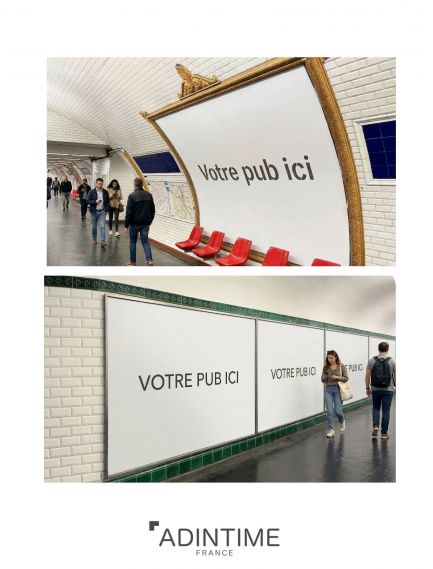
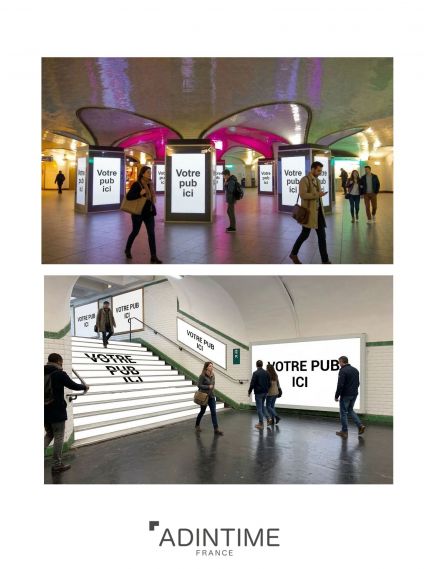
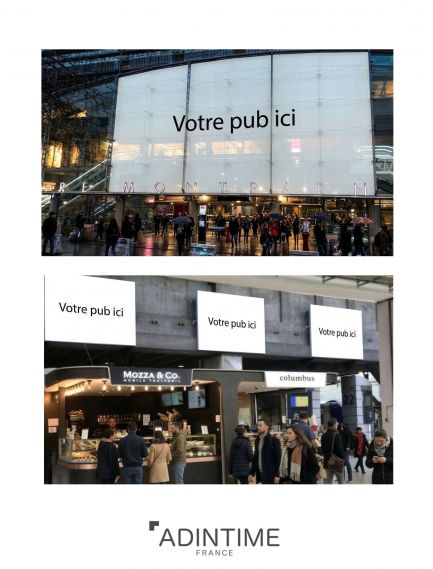
- Billboards are historically the medium of brand awareness, and recent studies confirm it. An Ipsos study conducted for JCDecaux in 2024 using eye-tracking glasses shows that on a 30-minute commute, 100% of people looked at at least one billboard. On average, they logged 29 glances of at least three seconds, without growing weary. As a result, nearly one in two campaigns is already memorized and correctly attributed to the brand after 30 minutes. A 2024 Nielsen analysis measured that an outdoor billboard campaign multiplied a brand's spontaneous awareness by 3.6 year-over-year, alongside a measurable increase in purchase intent.
- Street furniture and DOOH, with an even higher attention span, extend this effect in city centers.
- Television remains the mass medium to quickly establish a brand with a wide audience.
- Radio drives repetition and local proximity.
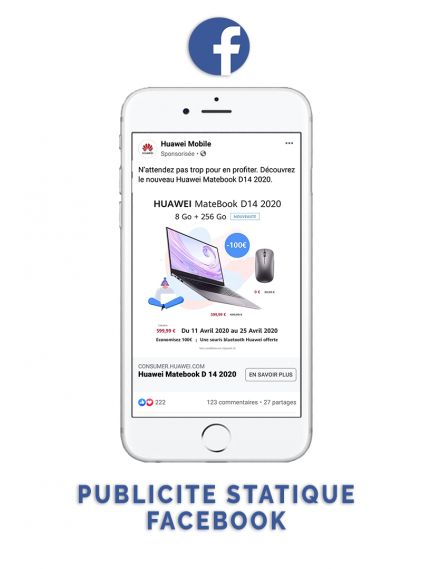
- Social networks build awareness among younger demographics and allow for precise targeting.
The right approach generally combines several of these levers depending on the target audience.
>>> Our article on the role of advertising puts these media into perspective
How to measure your brand awareness?
You can only manage what you measure. Brand awareness is quantified through studies, before and after a campaign.
📌 The benchmark method remains the brand awareness study: you survey a representative sample on what they know, both spontaneously and with assistance, before the campaign and then after. The gap measures the actual impact. This is the principle behind brand lift, which isolates a campaign's impact on awareness, consideration, and purchase intent by comparing an exposed group to a control group.
For billboards, post-test studies compare an exposed group to a control group using representative panels. They reveal the gain in spontaneous and aided awareness attributable to the campaign. These protocols now integrate eye-tracking and sometimes neuroscientific measurements of attention.
The mistake to avoid
Here is the nuance that separates savvy advertisers from the rest. Exposure does not guarantee recall.
When an ad network announces that a screen reaches 250,000 people per week, this number describes potential traffic, not a memorized audience. Between the people who pass by, those who see it, those who look long enough, and those who actually remember it, the funnel is narrow. In some cases, out of 250,000 drive-bys, only a few thousand people actually walk away with the brand in mind.
The lesson is not that billboards are ineffective, quite the contrary. It is that the quality of the creative changes everything. A clean layout, a highly visible logo, six words maximum, and strong contrast: these simple principles can multiply the memorization rate without changing a single euro of the media plan. Better to have five thousand solid memories than a million forgotten exposures.
>>> Learn more about the media plan
Summary table
| Level | What it measures | Primary medium |
|---|
| Aided awareness | Brand recognition | Billboards, display |
| Spontaneous awareness | Naming the brand without help | Billboards, TV, radio |
| Top of mind | First brand mentioned | Long-term campaigns |



 Top 30 best ad musics of all time (Updated 2026)
 The influence of advertising on purchasing behavior
 What is commercial advertising?
 Top 5 colors to use for creating your advertising posters | Adintime
 Facebook Ads Library: The ultimate guide to winning campaigns

 DISCOVER

 Movember : How brands can get involved without a misstep ?
 How to build an effective media strategy in 2026
 The AIDA model in advertising : Definition and examples
 First-party data : Definition and challenges in the cookieless era
 Customer Acquisition Cost (CAC) : Calculation and optimization