New ! Find your advertising panels at a glance  DISCOVER

UGC : What is user-generated content and why does it work ?

Pôle Marketing

Article summary : UGC in advertising

💡 What UGC is

  • UGC (user-generated content) refers to any content created by users or creators rather than by the brand itself: reviews, photos, test videos, unboxings.
  • We distinguish between spontaneous UGC (a customer posting naturally) and commissioned UGC from a paid creator, structured specifically for advertising.
  • Its driving force is trust: 92% of consumers trust a peer more than a brand's corporate message.

📊 Why it performs?

  • Posts featuring UGC generate on average 28% more engagement than purely branded content.
  • In paid advertising, UGC shows click-through rates up to 4 times higher and cuts the cost per click in half.
  • A UGC video costs between €50 and €500, compared to €1,000 to €5,000 for a traditional studio production.

🎯 How to use it?

  • Primarily in social ads, but also on product pages, in email campaigns, and even in DOOH billboard advertising.
  • Always secure commercial and advertising usage rights in writing before broadcasting.
  • Compensate creators properly: it is a professional service, not a favor or a gift.

Today, consumers spend more than five hours a day interacting with content created by other users. Reviews, test videos, stories, unboxings. Far more time than they spend in front of traditional advertisements. This shift has a name: UGC.

For a brand, the interest is twofold. On one hand, UGC inspires more trust than a polished corporate creation. On the other hand, it costs a fraction of the price of traditional advertising production. Two arguments that explain why nearly nine out of ten companies now integrate it into their mix.

Let's look at what UGC really is, why it converts, how to leverage it beyond social networks, and which legal rules you must not forget.

>>> Broadcast your content on social networks with Adintime

Article summary

  1. UGC: definition
  2. Why UGC works so well ?
  3. The real advantage: cost
  4. Where to use UGC (beyond social media) ?
  5. Working with UGC creators
  6. Rights and legal framework
  7. The limits to know

UGC: definition

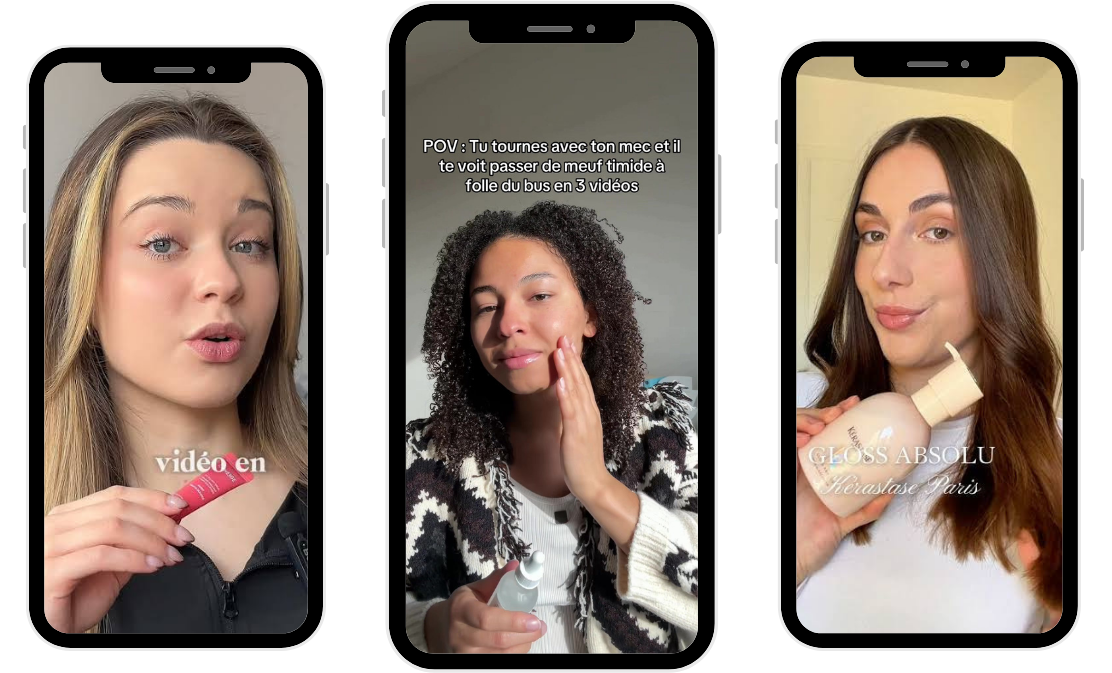
UGC (User-Generated Content): Content generated by users, it encompasses all content produced by individuals who are not part of the brand: customer photos, reviews, test videos, tutorials, unboxings, and spontaneous posts on social networks.

We must distinguish between two realities that are often confused:

Spontaneous UGC is a satisfied customer posting on their own accord. Precious, but unpredictable.

For example, an unboxing in a story, a detailed Google review, or a thank-you tweet. This can be encouraged by refining the packaging aesthetics, sliding a personalized note into the package, or creating a dedicated hashtag.

Commissioned UGC, on the other hand, is produced by a paid creator who shoots a video in a "real people, real product" format, designed from the start to serve as an advertisement. This second use case has exploded, with a 93% increase in the number of professional creators in one year.

The difference with influencer marketing is subtle but real. An influencer sells their community and their notoriety. A UGC creator primarily sells content: the brand acquires the video and broadcasts it on its own channels, including in paid advertising.

>>> Our article on influencer marketing details this distinction

Why UGC works so well?

It all starts with a stubborn figure: 92% of consumers place more trust in a recommendation from a peer than in a direct message from a brand. Faced with ads that are too perfect, people have developed a form of ad blindness. Content that looks like real life breaks through this barrier.

➡️ Social posts integrating UGC feature an engagement rate roughly 28% higher than standard content. On a product page, the presence of reviews and customer photos can drive conversions up by 74%, and visitors who actively interact with this content convert twice as much as others.

➡️ In paid advertising, the gap is clear: campaigns built on UGC record click-through rates up to four times higher and cut the cost per click in half. The cost per acquisition drops by 30% to 50% compared to a traditional creative asset.

An honest nuance, however. These numbers often come from players who sell UGC, so treat them as an order of magnitude rather than a absolute guarantee. The trend is solid, but the exact impact depends on your industry and the quality of the creators.

The real advantage: cost

This is arguably the most concrete argument. A UGC video produced by a creator costs between €50 and €500. The same duration in traditional production, involving a film crew, equipment, and post-production, ranges between €1,000 and €5,000, and sometimes much more.

In other words, you can produce ten UGC content pieces for the price of a single corporate video. This economy changes the way you work: instead of a single video asset broadcasted everywhere, you test ten different angles, keep the ones that perform, and cut the rest. UGC industrializes creative testing.

>>> For an SMB with a tight budget, this is often the ideal entry point for a small-budget advertising campaign that remains credible.

Where to use UGC (beyond social media)?

🔹The natural reflex is to turn to social networks, and that is justified. Instagram, TikTok, and short-form video formats are the natural home of UGC. But limiting it to social media means leaving a good part of its potential on the table.

🔹On an e-commerce site, a gallery of customer photos or review videos integrated into product pages increases time spent on-site and average order value. In email campaigns, sliding in a UGC video can boost the click-through rate spectacularly.

🔹Less obvious, but highly effective: billboards. Good, authentic content can fuel an outdoor advertising or DOOH campaign. A real face, a short testimonial, or a slice-of-life scene on a digital billboard in city centers or bus shelters stands out from traditional advertising visuals. UGC is not restricted to smartphone screens; it can take to the streets.

Working with UGC creators

In France, rates are structured by tier. A beginner creator charges between €50 and €150 per video, often offering a package of three to five content pieces for around €300 to €500. A confirmed creator, with a portfolio of recognized brands, positions themselves between €400 and €800 per content asset, and can go up to €1,500 for a complex video that includes advertising usage rights.

The brief makes all the difference. A creator is not an extra: give them context, the target audience, the key message, and the legal constraints of your sector, then grant them freedom regarding tone. Content that is too scripted loses exactly what makes UGC valuable, its natural feel.

A point that many overlook: not all sectors react the same way. Beauty, fashion, and food/beverage are the most receptive to UGC in France. For more technical or B2B offers, UGC still works, but the casting of the creator matters much more.

Rights and legal framework

This is the part that gets forgotten, and it costs a lot when things go wrong. A UGC content asset is not royalty-free just because it talks about your brand.

ℹ️ For spontaneous content published by a customer, you must obtain written authorization before reusing it, especially in paid advertising. A simple "yes go ahead" comment in a private message is not enough in case of a dispute. For commissioned content, the contract must state in black and white the transfer of rights, the duration of use, the authorized channels, and the geographical scope.

❗Beware of third-party rights: licensed music, a visible brand in the background, or a private venue. And do not forget the image rights of the people filmed. These verifications take ten minutes and prevent weeks of trouble.

The limits to know

UGC is not a magic wand. Bad content remains bad content, even if it's authentic. Spontaneity does not replace a clear message and a solid offer.

Another pitfall: volume. Continuously fueling UGC campaigns requires a steady stream of creators and content, which assumes an optimized workflow. Furthermore, content that is too standardized ends up looking like a traditional ad, which cancels out its advantage.

Finally, UGC shines at the top and middle of the funnel, specifically for discovery and consideration. To convert and retain, it must be integrated into a comprehensive cross-channel strategy rather than running completely on its own.

Summary table

CriterionUGCTraditional production
Cost per video€50 to €500€1,000 to €5,000
PerceptionAuthentic, relatablePolished, corporate
CTR in paid campaignsUp to 4× higherBaseline
Ideal forDiscovery, considerationBrand image, TV

Move from UGC to broadcasting

Producing UGC is only half the battle. The other half is broadcasting it to the right audiences, in the right place. An excellent piece of content that reaches no one is useless.

With Adintime, you buy advertising space on social networks, in display, and even on billboards, without intermediaries and in just a few clicks. Your best UGC content pieces become campaigns that deliver results.

>>> Contact us to receive a tailored distribution plan

FAQ: everything to know about UGC

What is the difference between UGC and influencer marketing?

An influencer promotes a brand to their own community and leverage their notoriety on their own channels. A UGC creator produces content that the brand acquires and broadcasts itself, including in paid advertising. In one case you pay for an audience, in the other you pay for content.

How much does a UGC video cost in France?

Between €50 and €150 for a beginner creator, €400 to €800 for an established profile, and up to €1,500 for a complex video including advertising rights. This compares to €1,000 to €5,000 for a traditional production.

Is UGC really more effective than traditional advertising?

When it comes to trust and engagement, yes: about 28% more engagement and up to 4 times higher click-through rates in paid campaigns. However, these figures often come from industry players, so treat them as an order of magnitude. Actual effectiveness depends on your market and the quality of the creators.

Can a customer's content be used without authorization?

No. Reusing a customer's photo or video, especially in advertising, requires written authorization. For commissioned content, the contract must specify the transfer of rights, duration, channels, and geographic area.

Is UGC only useful on social networks?

No. It also performs well on e-commerce product pages, in email marketing, and even in DOOH billboard advertising. A real testimonial on a digital billboard in city centers or bus shelters stands out from traditional advertising visuals.

Related products

Related posts