The promise is enticing: capture massive attention for free by jumping into a conversation that has already started. But this exercise is a double-edged sword. Well played, it establishes your brand. Missed, it sticks you with a bad buzz within a few hours.
We will define newsjacking, distinguish it from wait marketing, show examples that worked, detail the method, and list the pitfalls to avoid.
Article summary
- Newsjacking: definition
- Newsjacking or wait marketing?
- Why newsjacking works ?
- Three examples that worked
- The method for success
- Pitfalls and bad buzz
Newsjacking: definition
⚡ Newsjacking This technique consists of seizing a current news story to associate it with your message, product, or brand image, in order to benefit from the media attention it generates. Literally, it involves hijacking a piece of news to fit naturally into the public conversation.
The term blends "news" and "hijacking." It was popularized by David Meerman Scott, a marketing and public relations expert, in a book published in 2011. The idea is not new, but social networks have given it unprecedented power: any brand can now react live, without passing through traditional media channels.
🎯 The objective is threefold: increase brand awareness, strengthen likeability, and generate engagement. Sometimes, it can even drive a quick boost in sales.
>>> Amplify your media stunts on social networks with Adintime
Newsjacking or wait marketing?
Both play on current events, but not in the same way.
⏳ Wait Marketing Anticipates a long-planned event: a seasonal holiday, a major competition, or an awaited release. You have the time to prepare your move.
⚡ Newsjacking Reacts to the unexpected: a live power outage, a surprising statement, or a sudden cold snap. It plays out in real time, within a narrow window. This is what makes it both riskier and more spectacular when it works.
The two approaches complement each other in a clever editorial calendar: the predictable events you prepare for, and the unexpected moments you catch on the fly.
>>> Learn more about wait marketing
Why newsjacking works?
The mechanism is simple: current news already mobilizes the attention of a large audience. By grafting yourself onto it, you capture a share of this attention without paying to generate it. It is a shortcut to visibility, provided you arrive at the right time.
The windfall effect is real. A well-targeted reaction, published at the peak of the event, can generate coverage equivalent to an expensive campaign.
There is also an image benefit. A brand that reacts with relevance and humor appears sharp, present, and in tune with its time. It shows that there are real people behind the logo.
Three examples that worked
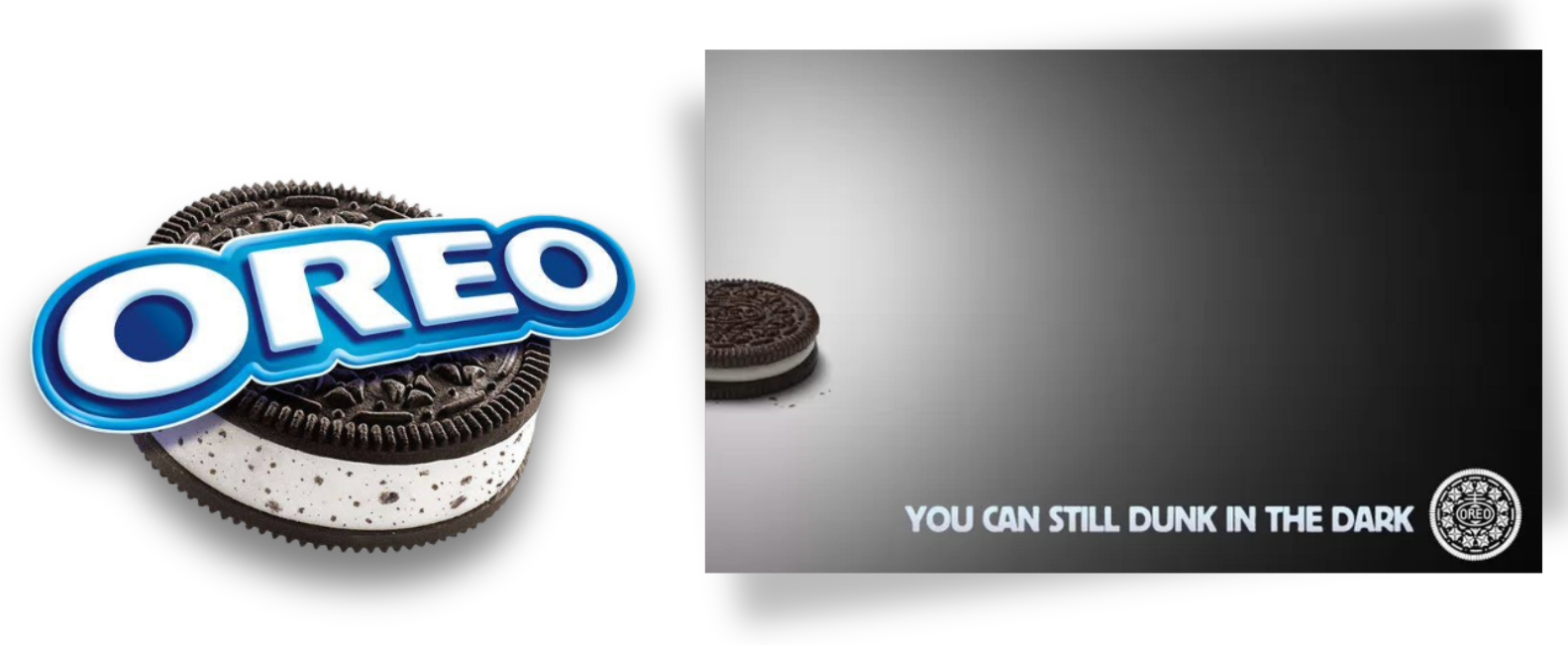
1. Oreo, Super Bowl 2013
The textbook case. Perfect timing, a funny message directly tied to the blackout, a visual consistent with the brand, and execution in just a few minutes thanks to a dedicated, ready team.
2. Le Slip Français, cold snaps
During winter weather alerts, the brand hijacked weather reports in a few hours to showcase its underwear made in France. Humor, warmth, and patriotism: a viral approach perfectly aligned with its DNA.
3. SNCF Réseau, 2023 storm
During a storm, the company published an educational graphic about clearing fallen trees, matching the dramatic tone of rolling news channels. A clever way to explain delays while riding the current news wave.
The common denominator of these three successes: a clear link to the brand, a tone faithful to its identity, and a swift reaction. None of them forced it.
The method for success
Newsjacking looks spontaneous, but it relies on organization. Four key principles.
Set up a monitoring system Alerts, trends, benchmark media, and social listening. You can only seize a story if you spot it in time.
Be fast, but not rushed The window is measured in hours, sometimes minutes. But speed does not mean recklessness: always verify your sources before reacting. Relaying fake news just to be in the loop is the best way to lose credibility.
Bring a unique angle Do not do what everyone else is doing. Rely on your tone, your perspective, and your expertise. A copy-paste of what other brands are saying brings zero value.
Create a bridge to your business A good newsjacking links current events to your universe in a natural way. If the connection is far-fetched, it is better to pass. Once the content is created, amplify it on your social channels while the topic is hot, potentially boosting it slightly to broaden its reach.
Pitfalls and bad buzz
Here is the part you cannot afford to ignore, because a failed newsjacking does more damage than staying silent.
Certain topics must be ruled out entirely: politics, religion, war, tragedies, and disasters. Using them to promote a product comes across as cynical. Others, like health or parenting, can work provided they are handled with great finesse.
Bad buzz often stems from a blind spot. The Tim Hortons example is telling: the chain wanted to joke about a royal couple moving to Canada by promising free coffee for life.



 Top 30 best ad musics of all time (Updated 2026)
 The influence of advertising on purchasing behavior
 What is commercial advertising?
 Top 5 colors to use for creating your advertising posters | Adintime
 Facebook Ads Library: The ultimate guide to winning campaigns
 DISCOVER


 Movember : How brands can get involved without a misstep ?
 How to build an effective media strategy in 2026
 The AIDA model in advertising : Definition and examples
 First-party data : Definition and challenges in the cookieless era
 Customer Acquisition Cost (CAC) : Calculation and optimization