New ! Find your advertising panels at a glance  DISCOVER

OOH (Out Of Home): Formats and Rates

Pôle Marketing

Want to save time ?

Get this article summarized in seconds with AI

🕒 What Is Temporary Outdoor Advertising?

  • Short-term advertising campaign (1 or several weeks).
  • High-impact visibility, perfect for promotions or marketing events.
  • Pricing usually based on a 1-week display period.

📅 When & Why Should You Launch a Campaign?

  • Great for peak retail seasons: back-to-school, holidays, sales, product launches.
  • Drives foot traffic to stores or website visits.
  • Boosts local brand awareness effectively.

📐 Formats & Sample Pricing

  • Metro posters: €3,000 – €5,000 excl. VAT for 15 days on 40 panels in Paris (e.g. northeast area).
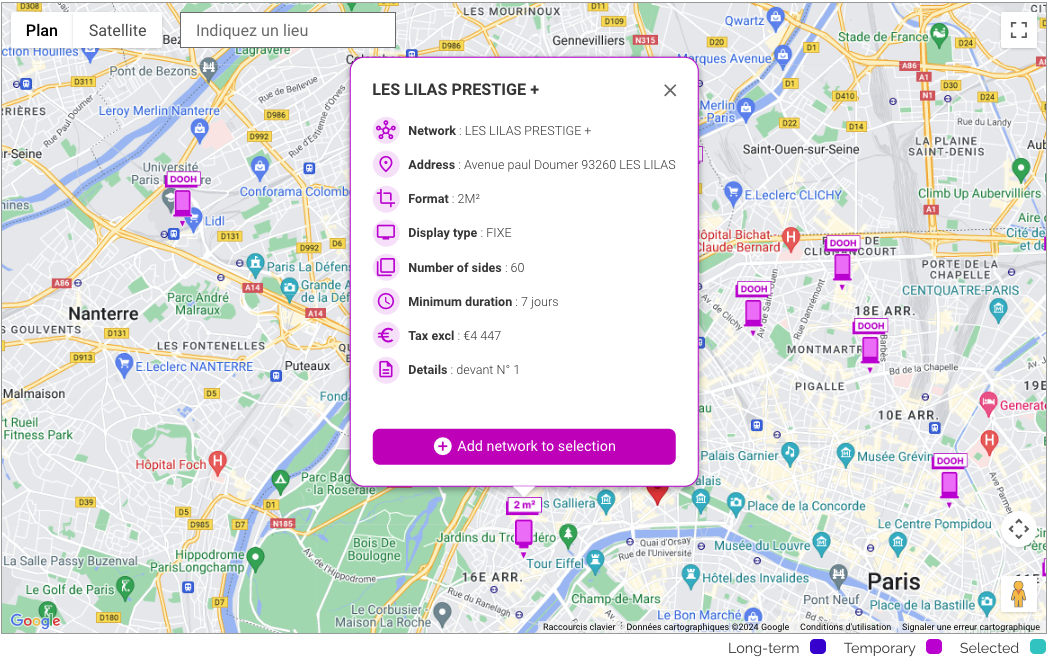
  • 2m² poster: ideal for city centers — €4,447 excl. VAT for 60 faces / 7 days.
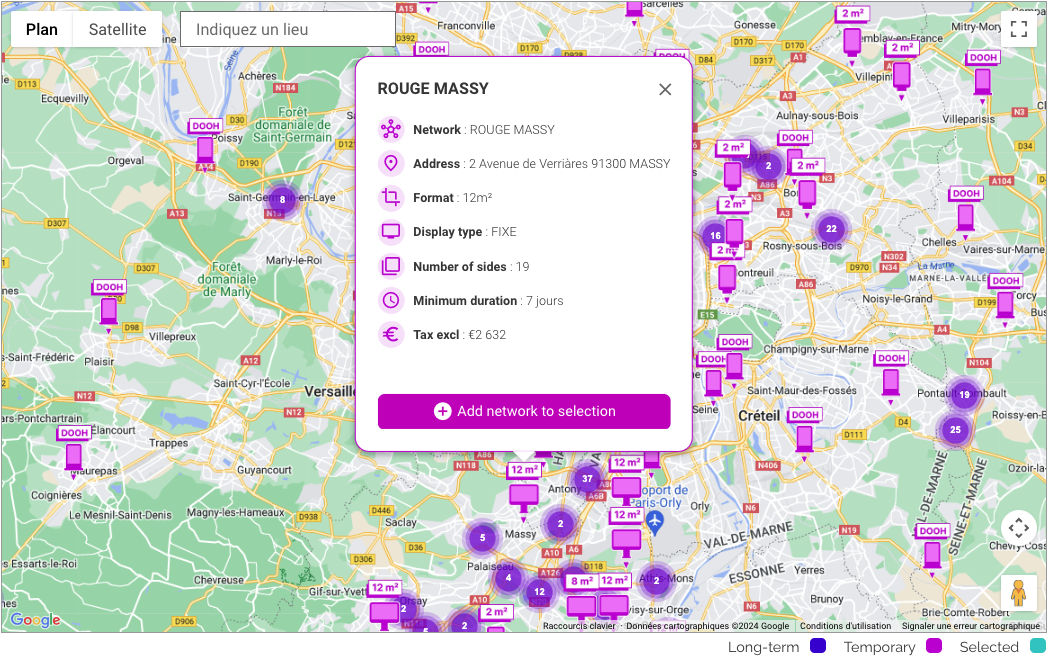
  • 12m² billboard: 4x3 format along major roads — €2,632 excl. VAT for 19 faces in Massy / 7 days.
  • Bus side ads: wide mobile coverage — €2,000 to €4,000 excl. VAT per week (e.g. Orléans).

📊 Average Campaign Costs & Price Per Panel

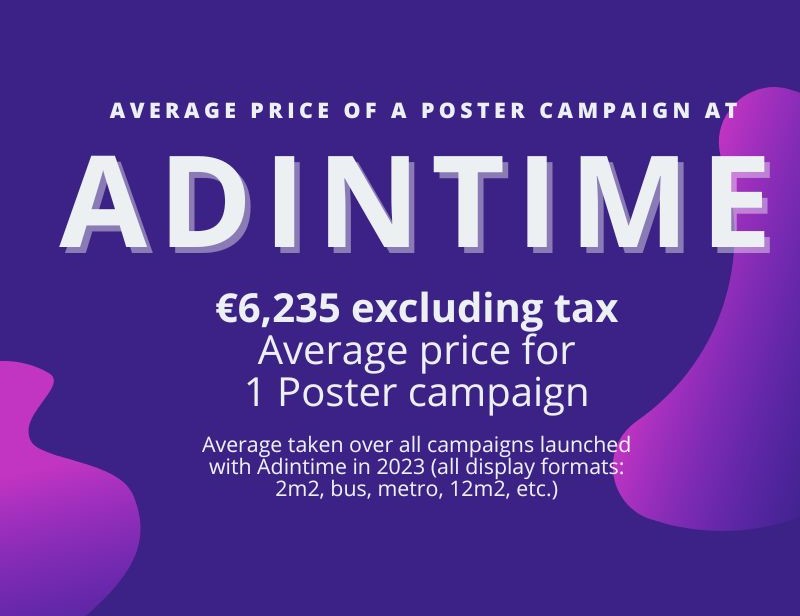
  • Average campaign cost: €6,235 excl. VAT (all formats combined in 2023).
  • Estimated cost per panel:
    • 2m²: €40–€80 excl. VAT
    • 8m²: €60–€100 excl. VAT
    • 12m²: €70–€110 excl. VAT
    • Left bus side: €50–€90 excl. VAT
    • Right bus side: €25–€55 excl. VAT
    • Bus rear: €55–€90 excl. VAT

📍 What Is Long-Term Billboard Advertising?

  • Panels rented for several months (up to a year).
  • Permanent local visibility — ideal to promote your shop or service nearby.
  • Highly effective for generating foot traffic and building brand awareness in key catchment areas.

💶 Long-Term Billboard Pricing

  • Pricing varies based on format, duration, visibility, and location.
  • Panels in busy city centers or along high-traffic roads are more expensive.
  • To check available locations and prices: browse our interactive map.

*Prices are indicative and may vary depending on the media owner, campaign duration, time of year, and city.

What Is Temporary Outdoor Advertising?

This is the most common type of billboard campaign. It differs from long-term advertising by delivering high impact over a short period (from one to several weeks), often across dozens, hundreds, or even thousands of panels depending on the network.

Billboard advertising prices are typically based on a one-week display period.

When and Why Should You Launch One?

For retailers and businesses, this format is ideal for highlighting events and seasonal promotions tied to the marketing calendar (Mother's/Father's Day, back-to-school, Valentine's Day, Black Friday, Christmas, etc.).

Temporary billboard ads can also serve broader brand awareness goals, such as promoting a new store opening, a service launch, or driving traffic to a website or physical location.

Billboard formats: dimensions, visibility, and use cases

The billboard format determines its visibility, audience reach, and pricing. Choosing the right display format depends on your objectives (brand awareness, drive-to-store, product launch), your target audience, and your catchment area. In France, the most widely used outdoor advertising formats range from 2m² (6-sheet/MUPI or bus shelters, pedestrian-focused) to 12m² (4x3 billboards, roadside or suburban format), including 8m² posters, subway advertising, bus and tram advertising, and digital billboards (DOOH). Each format is designed for a specific use case and budget.

Below is a visual summary of the most common billboard dimensions for your outdoor advertising campaigns:

OOH billboards formats

Billboard prices and formats: a detailed guide

Discover below the main billboard formats, their exact dimensions, typical audience, and indicative pricing. Note: long-term bookings (permanent displays) can also be implemented on buses, primarily within small-scale local transport networks.

2m² Billboard (MUPI and Bus Shelter): dimensions 120 x 176 cm

The 2m² advertising panel, also known as a "MUPI" (freestanding city information panel) or bus shelter poster, measures approximately 120 x 176 cm (portrait format). Positioned in city centers, on sidewalks, and at bus stops, this format is designed to capture the attention of pedestrians and motorists in dense urban environments. It is the gold standard billboard format for local campaigns, drive-to-store strategies, and community-based communication.

Real-world example: in the case below, the price of a 2m² advertising network is €4,447 (excl. VAT) for 60 faces over 7 days.
2m2 Advertising rates

➡️ Explore our interactive map to find rates for 2m² billboards in your area.

8m² Billboard: dimensions 3 x 2.4 m

The 8m² advertising panel measures 3m wide by 2.4m high. As an intermediate format between the pedestrian-focused 2m² and the motorway 12m², it dominates secondary roads, city entrances, and commercial areas. It offers an excellent compromise between visual impact and budget, making it particularly suitable for regional campaigns and local advertisers seeking high visibility without moving to large-scale formats.

➡️ View the 8m² billboard networks available in France.

12m² Billboard (4x3 billboard): dimensions 4 x 3 m

The 12m² advertising panel, commonly known as a 4x3 billboard, measures 4m wide by 3m high. It is the flagship format for roadsides, major highways, and suburban areas. Visible from a great distance, it is designed for large-scale campaigns, product launches, and brands looking to maximize their impact on motorists. While more expensive than smaller formats, it provides unmatched visual weight in return.

Real-world example: a 12m² billboard network in Argelès-sur-Mer is offered at €3,000 (excl. VAT) for 6 months on a long-term (permanent) basis.
12m2 advertising

Subway & Metro advertising: corridor, platform, and escalator formats

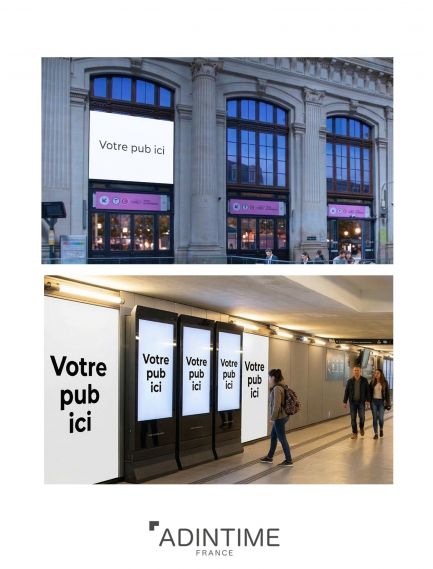
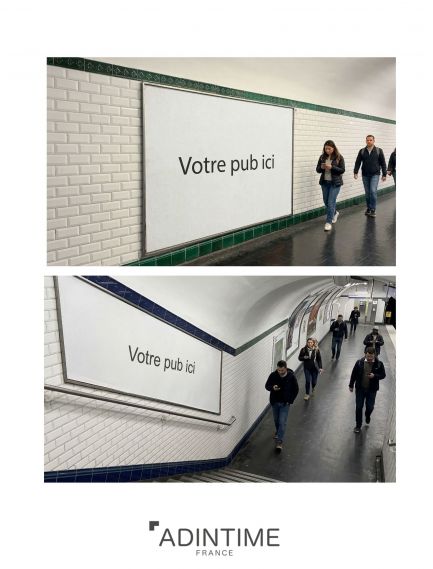
Subway advertising is a highly effective billboard format for capturing the attention of commuters in urban environments. Several formats are available: corridor panels (classic 2m²/6-sheet, 120 x 176 cm), metro platforms (variable formats up to 8m²), escalator panels, and in-carriage displays. These placements benefit from long exposure times (waiting on platforms, walking through corridors), making them ideal for brand awareness, product launches, or event promotions targeting urban and high-income (ABC1) audiences.

Real-world example: the price of a 15-day advertising campaign in the Paris Metro, covering a network of around forty faces in northeast Paris corridors, is estimated between €3,000 and €5,000 (excl. VAT).

➡️ Estimate your budget with our metro advertising rate simulator.

Bus advertising: nearside, offside, and rears

Bus advertising is an incredibly effective mobile format: the billboard travels through the city, exposing your brand to diverse audiences throughout the day. Three main bus advertising formats are available:

  • Nearside (Curb side): A large surface visible to pedestrians at every stop, it is the most exposed format.
  • Offside (Street side / T-side): Captures the attention of motorists in traffic.
  • Bus Rears: Visible to drivers following the vehicle, providing long exposure during traffic.

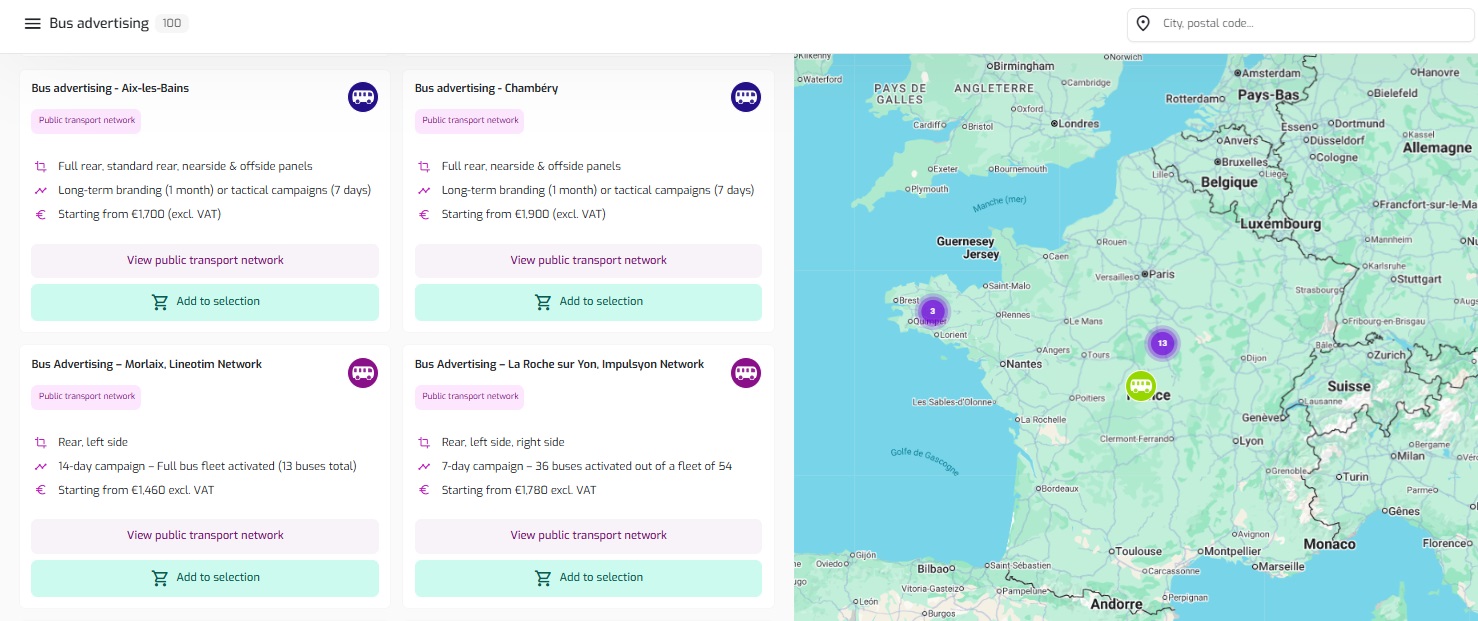
The price of a bus campaign depends on the network, its route, and the season. In Orléans, a one-week bus campaign on the nearside with approximately forty faces ranges between €2,000 and €4,000 (excl. VAT).

➡️ Discover bus advertising networks and their rates on our interactive map.
Digital Billboard (DOOH): LED and digital screens

The digital billboard, or DOOH (Digital Out-of-Home), replaces paper posters with LED screens broadcasting animated visuals in a loop. Available in street furniture, transit stations, airports, shopping malls, and along major highways, this format allows for the rotation of multiple creatives per day. It also offers the flexibility to adapt messages based on weather, time of day, or real-time events, with buying options by the day (or even by the hour) in addition to the standard weekly booking. According to the 2025 BUMP, DOOH already accounts for 23% of outdoor advertising revenue in France, and 47% of OOH advertisers now allocate part of their budget to it. It is an essential format for brands seeking a billboard that is modern, flexible, and data-driven.

Average cost of an outdoor advertising campaign

Based on Adintime's 2023 data, the average price for an outdoor advertising campaign is €6,235 (excl. VAT) (average across all formats combined).

Billboard formats and price

SupportCampaign ExampleEst. Price (Excl. VAT)Billboard Examples
Subway (Corridors)40 faces / 15 days (Paris NE)€3,000 - €5,000View offer
2 m² Billboard (City light)60 faces / 7 days€4,447View offer
12 m² BillboardLocal / 6 months (Argelès)€3,000View offer
Bus (Right side)Chambéry bus system€2,000 - €4,000View offer

What is cost per face in billboard advertising?

Cost per face refers to the price to use one single advertising face on a billboard. This metric is widely used to define pricing within billboard networks. It varies based on size, location, and duration. It’s an essential KPI for advertisers to compare options and optimize their budget based on the exposure of each face.

Price List: Cost per Face
2 m² Billboard (Bus Shelter)€40 – €80 excl. VAT
8 m² Billboard€60 – €100 excl. VAT
12 m² Billboard€70 – €110 excl. VAT
Bus (Rear / Left side)€50 – €90 excl. VAT
Bus (Right side)€25 – €55 excl. VAT
Source: Adintime Observatory 2023

How to choose the right billboard format?

The choice of billboard format depends on three main criteria:

  • Your objective: local drive-to-store → 2m² or 8m² panels near the point of sale; brand awareness → 12m² (4x3) on major roads; high-impact product launch → DOOH or subway advertising.
  • Your target audience: pedestrians and high-income urbanites (ABC1) → subway, MUPIs, bus shelters; motorists → 12m² roadside billboards, bus rears; mobile audiences across multiple districts → bus and tram advertising.
  • Your budget: from a few thousand euros (excl. VAT) for a local 2m² network or long-term 12m² display, up to tens of thousands of euros for a Paris Metro campaign or a large national 4x3 network.

➡️ Find the right billboard format for your campaign on our interactive map.

What Is Long-Term Billboard Advertising?

Long-term billboards are typically rented for several months, half a year, or a full year to promote a nearby store or service.

Long-term billboard advertising ensures that visuals remain displayed over an extended period, months or even a year, offering brands continuous visibility and stable local presence.

Unlike temporary or event-based campaigns, long-term displays allow brands to maintain consistent exposure and stay top of mind with their target audience.

Why Choose Long-Term Billboard Advertising?

This format is essential for local communication, especially for physical retail.
Beyond brand awareness, long-term ads are a powerful driver of foot traffic by signaling your location within your catchment area.

Long-term billboard advertising is ideal for brands aiming to build lasting connections with their audience through constant visibility.

Pricing for Long-Term Billboard Campaigns

Long-term billboard pricing varies based on panel size, location, display duration, and desired impact. A large panel in a high-traffic urban zone will cost more than panels in the suburbs. This format is a great fit for local businesses aiming to attract nearby customers, or brands seeking to build long-term visibility.

To see exact pricing and available locations, explore our interactive map of long-term billboards in France. You can view panel locations and access price details for each one, helping you plan your campaign efficiently.

So, are you ready to launch your outdoor advertising campaign?

Feel free to request a quote on the Adintime platform, it's completely free! If the specific area or city you're looking for isn't available, just get in touch, and we'll do our best to add it for you.

FAQ : Everything you need to know about billboard formats

What are the dimensions of a billboard?

Billboard dimensions in France vary by format. The main sizes are: the 2m² panel (MUPI or bus shelter) measuring 120 x 176 cm, the 8m² panel measuring 3 x 2.4 m, and the 12m² panel (4x3 billboard) measuring 4 x 3 m. Additionally, there are specific formats for the metro, buses, trams, and digital DOOH screens.

What is the size of a 4x3 billboard?

The 4x3 billboard, also known as a 12m² billboard, measures 4 meters wide by 3 meters high. It is the high-impact format of outdoor advertising, primarily used along roadsides, major urban thoroughfares, and suburban areas. Its 12m² surface area makes it one of the most visible formats for brand awareness campaigns and product launches.

What is the size of a MUPI (bus shelter poster)?

A MUPI (city information panel) or bus shelter poster measures approximately 120 x 176 cm, which is a surface area of about 2m² in portrait format. This format is installed on sidewalks, at bus stops, and as part of street furniture. It is designed to capture the attention of pedestrians and motorists in dense urban environments.

What is the difference between an 8m² and a 12m² billboard?

The 8m² billboard (3 x 2.4 m) is an intermediate format used on secondary roads, city entrances, and commercial zones. The 12m² billboard or 4x3 (4 x 3 m) is a high-impact format intended for major highways and large-scale national or regional campaigns. The 12m² offers longer-distance visibility but generally costs more than the 8m².

Which billboard format should I choose for a local campaign?

For a local or neighborhood campaign (drive-to-store, store opening, promotion), the most effective formats are the 2m² panel (MUPI / bus shelter) in city centers and the 12m² long-term (permanent) billboard within the catchment area. Bus advertising is also effective for covering an entire city while maintaining a controlled budget.

What is the average price of a billboard?

The average price of an outdoor advertising campaign is €6,235 (excl. VAT) across all formats (Adintime 2023 Observatory). The cost per face varies by format: €40 to €80 for a 2m² panel, €60 to €100 for an 8m² panel, €70 to €110 for a 12m² panel, and €25 to €90 for a bus face.

What is a digital billboard (DOOH)?

A digital billboard, or DOOH (Digital Out-of-Home), is an LED screen that replaces traditional paper posters. It broadcasts several visuals in a loop, can be animated, and is adapted in real-time based on weather, time, or events. According to the 2025 BUMP, DOOH represents 23% of outdoor advertising revenue in France, with its audience growing by +12.4% vs. 2023.

What is the standard display duration for a billboard?

In temporary outdoor advertising, the standard duration is 7 days (calendar week from Monday to Sunday). For long-term (permanent) displays, the duration varies from 1 month to 1 year, typically 6 months. DOOH offers more flexible durations, sometimes by the day or even the hour.

What advertising formats are available in the metro?

The most common subway advertising formats are: the 2m² corridor panel (120 x 176 cm), the platform panel (variable formats up to 8m²), escalator panels, and in-carriage displays. These placements benefit from high exposure times and reach a high-income urban audience (ABC1).

What is the difference between a billboard and outdoor advertising?

Outdoor advertising (or OOH, Out-of-Home) is the global category that includes all advertising media visible in public spaces: billboards, street furniture, transport, stations, airports, shopping malls, and DOOH screens. A billboard is therefore a specific format within the broader outdoor advertising industry.

Related products

Related posts